Skip to content


Learn how to read Google Search Console’s generative AI performance report, track AI Overviews visibility and measure AI traffic in GA4.
In the fast-paced world of digital marketing, content creation is at the heart of a successful strategy. But with increasing demands for fresh, high-quality content and limited resources, scaling output can feel like an impossible challenge.
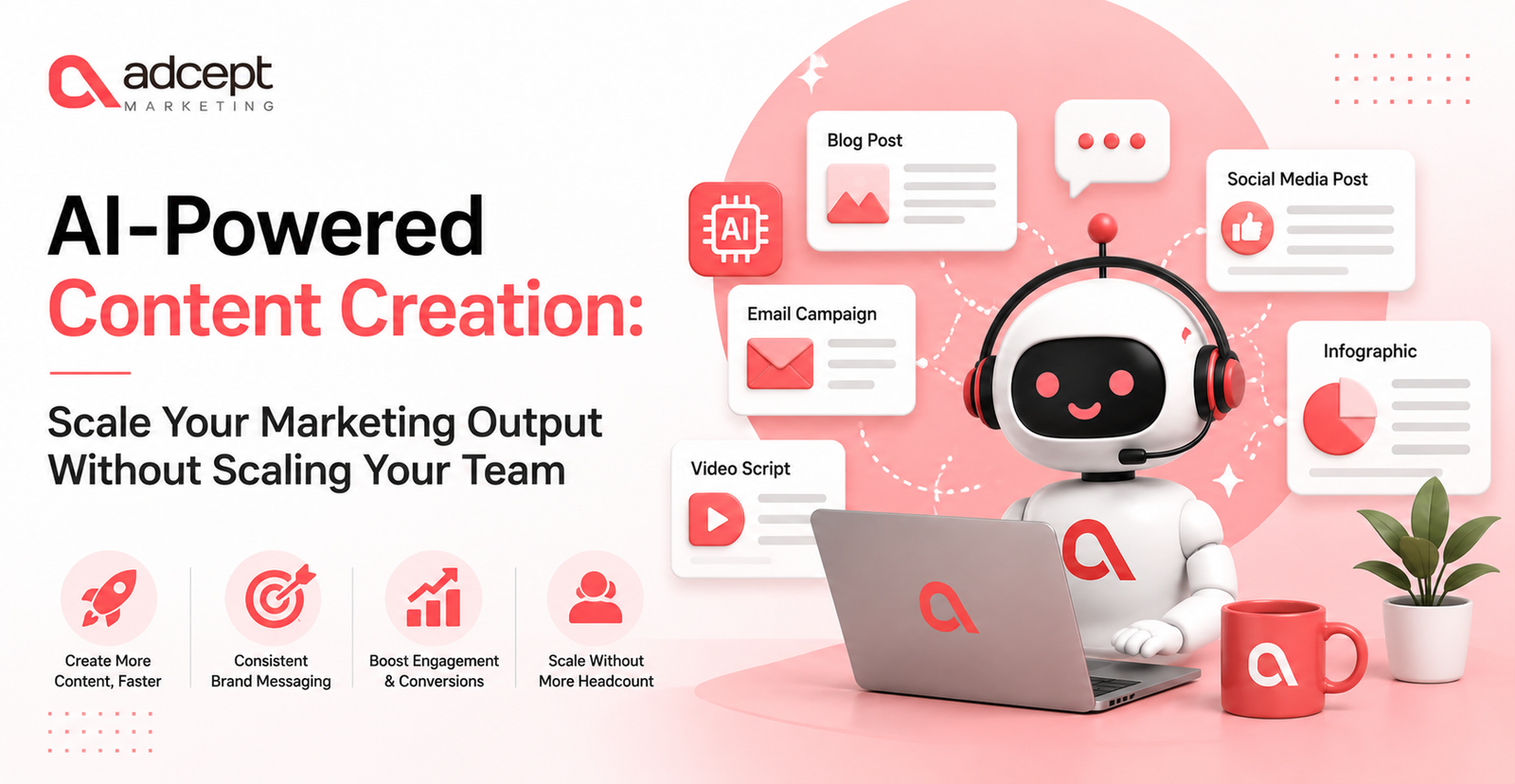
AI-powered content creation is transforming how Australian businesses approach this challenge. Rather than simply producing more content, AI tools enable marketers to amplify their content strategy while improving quality and consistency. By automating the research, outline, and first-draft stages, AI allows marketing teams to scale their output without necessarily increasing headcount.
In this article, we’ll explore how AI-driven content creation tools work, how Australian businesses are leveraging them to streamline their marketing processes, and how to implement AI in your own content workflows effectively.
What is AI-Powered Content Creation?
AI-powered content creation refers to the use of artificial intelligence to assist with the generation of content, from initial research and drafting to publishing. AI tools can generate first drafts, assist with research synthesis, suggest content improvements, and even help in SEO optimisation.
The key benefit is efficiency. AI does not replace human creativity or strategic thinking; instead, it augments the process by automating repetitive and time-consuming tasks. By leveraging AI for content creation, Australian businesses can produce more content in less time while maintaining high editorial standards.
How AI Can Help You Scale Your Content Creation
Scaling content production isn’t just about creating more articles or posts; it’s about increasing quality while maintaining a consistent brand voice and message. AI tools make this possible by automating the lower-level tasks that traditionally take up most of a marketer’s time.
1. Research and Data Synthesis
One of the most time-consuming tasks in content creation is research. AI tools like Frase and ChatGPT-4 can automate the research process, gathering information from trusted sources, summarising key insights, and presenting it in a way that’s ready for content creation.
- Example: AI can quickly generate an outline or key points for an article based on the latest industry trends, saving time on initial research and enabling writers to focus on high-value editorial work.
By leveraging AI, you can shorten your content production cycle, moving directly to the drafting stage, armed with relevant and accurate data.
2. Outline Generation
AI can generate article outlines based on predefined keywords, topics, and content goals. This is particularly helpful for large-scale content operations, where creating a clear, structured outline is key to maintaining consistency.
- Example: An AI-powered tool can analyse a topic, suggest headings, subheadings, and key talking points, and even provide suggestions for SEO optimisation based on what’s currently ranking for that topic.
This process ensures that every piece of content adheres to a proven structure, aligning with both SEO best practices and reader engagement strategies.
3. First Draft Creation
AI tools can create first drafts based on the outline and research. These drafts can be refined and personalised by your marketing team, saving valuable time and effort in the content creation process.
- Example: AI can produce a rough draft of a blog post or social media caption based on a set of instructions or a brief. Writers can then focus on fine-tuning the content for tone, voice, and accuracy.
AI-generated drafts allow writers to focus on quality control, editorial voice, and ensuring the content aligns with brand guidelines, rather than spending hours starting from scratch.
4. SEO Optimisation
AI can analyse existing content and provide suggestions for SEO optimisation. By integrating tools like Clearscope or SurferSEO, AI can recommend keyword adjustments, internal linking strategies, and content structure changes to ensure that your content is not only high-quality but also search engine-friendly.
- Example: AI can suggest optimising an article with additional keywords, improving header tags for better readability, or ensuring your content addresses key People Also Ask queries.
These AI-driven insights help improve your content’s organic reach, driving more traffic and increasing your visibility in search engines.
How Australian Businesses Are Leveraging AI for Content Creation
Australian businesses, particularly those in competitive industries like e-commerce, B2B services, and digital marketing, are rapidly adopting AI to scale their content operations. Let’s take a look at some real-world applications.
1. Automating Blog Post Creation
Australian e-commerce businesses are using AI to automate the creation of blog posts and product descriptions. By integrating AI tools like Frase or ChatGPT with their content management systems, businesses can quickly generate SEO-friendly articles based on popular search queries, trends, or customer FAQs.
- Example: An Australian furniture company may use AI to create product descriptions, blog posts on home decor trends, and “how-to” guides to drive organic traffic and increase sales.
2. Social Media Content Scheduling
Social media marketing is essential, but it requires a constant flow of content. AI tools like Hootsuite and Buffer offer scheduling capabilities, while AI can help generate captions, hashtags, and even identify trending topics in real-time. This allows Australian businesses to maintain a consistent social presence without overburdening their team.
- Example: AI-generated captions for Instagram or LinkedIn posts can be automatically scheduled, ensuring a steady flow of content and engagement without needing to write every post manually.
3. Repurposing Content Across Channels
AI can assist in repurposing content across different channels, ensuring that a single long-form piece of content can be adapted into multiple formats. For example, an AI tool can automatically extract key quotes, create infographics, or summarise a blog post into a Twitter thread.
- Example: An Australian SaaS company might create a whitepaper on industry trends and use AI to repurpose it into a series of blog posts, social media updates, and email newsletters.
Repurposing content not only saves time but also ensures that your content reaches a wider audience across various platforms.
How to Implement AI-Powered Content Creation in Your Business
Now that we’ve covered the benefits, let’s explore how you can start using AI-powered content creation in your business.
1. Choose the Right AI Tools
Start by selecting the right AI tools for your needs. Some popular options for content creation include:
- Claude (Anthropic): A powerful language model for generating high-quality content and research.
- ChatGPT-4: Known for creating engaging and informative content, including blog posts, social media updates, and scripts.
- Jasper: A platform designed specifically for marketing content, with templates for ads, emails, and blog posts.
2. Create Clear Content Guidelines
To maintain consistency in brand voice and quality, establish detailed content guidelines. These should outline the tone of voice, writing style, and any industry-specific language or keywords to be used.
- Example: If you’re a healthcare provider, you might want to ensure that the AI tool adheres to specific guidelines around medical terminology and patient privacy.
3. Train Your Team on AI Prompting
AI tools work best when provided with clear instructions. Train your marketing team on how to give effective AI prompts to generate high-quality content. For instance, a good prompt for AI might be: “Write a 500-word blog post on sustainable fashion trends for 2023, using SEO-friendly keywords like ‘eco-friendly fashion’, ‘sustainable materials’, and ‘ethical fashion brands’.”
4. Integrate AI into Your Existing Content Workflow
Ensure AI tools are integrated into your existing content workflows. This could mean connecting your AI tool to your CMS, social media scheduling platform, or email marketing tool. AI can generate drafts, which can be edited, optimised for SEO, and then scheduled for distribution.
5. Monitor and Optimise Performance
After implementing AI content creation, monitor the performance of your content regularly. Check metrics like page views, social engagement, and search rankings to see how AI-generated content is performing.
- Tip: Make adjustments based on feedback and performance data to improve content quality and engagement.
Conclusion
AI-powered content creation is an essential tool for Australian businesses looking to scale their marketing efforts without scaling their team. By automating the research, drafting, and SEO optimisation stages of content production, businesses can focus on editorial quality, strategy, and customer engagement.
AI allows marketers to multiply their output while maintaining a consistent, high-quality standard, offering a significant competitive advantage in today’s content-driven world.
At Adcept, we help Australian businesses implement AI-driven workflows that enhance productivity, maintain brand integrity, and drive real business results. If you’re ready to scale your content creation without increasing headcount, we’re here to help.
Key Takeaways
- AI tools automate content research, drafting, and SEO optimisation, allowing teams to scale output.
- Repurposing content through AI saves time and ensures a consistent presence across platforms.
- AI-driven content creation tools should be integrated into existing workflows for maximum efficiency.
- Implementing AI content tools requires clear guidelines and effective training to maintain brand voice consistency.
FAQs
Q: Will Google penalise AI-generated content?
Google does not penalise AI-generated content as long as it meets E-E-A-T (Expertise, Authoritativeness, Trustworthiness) standards and provides value to users. AI-assisted content, when reviewed and edited for quality, can perform well in search rankings.
Q: What AI tools are best for content creation in Australia?
Popular AI tools include Claude (Anthropic), ChatGPT-4, Jasper, and Frase. Each tool has unique strengths, with Claude and ChatGPT-4 excelling in content generation, and Frase focusing on SEO optimisation.
Q: How do I maintain brand voice consistency in AI-generated content?
Develop clear brand voice guidelines and provide these as system-level instructions for AI tools. Regularly review AI output to ensure it aligns with your brand’s tone and messaging before publishing.
Q: How can AI help with SEO in content creation?
AI can suggest SEO improvements, such as keyword usage, internal linking, and content structure, to ensure your content ranks higher in search engine results.
Q: How much time can I save by using AI for content creation?
AI can save up to 50-70% of the time spent on research, drafting, and editing, allowing content creators to focus on strategy and refining their content’s message.