Skip to content


Learn how to read Google Search Console’s generative AI performance report, track AI Overviews visibility and measure AI traffic in GA4.
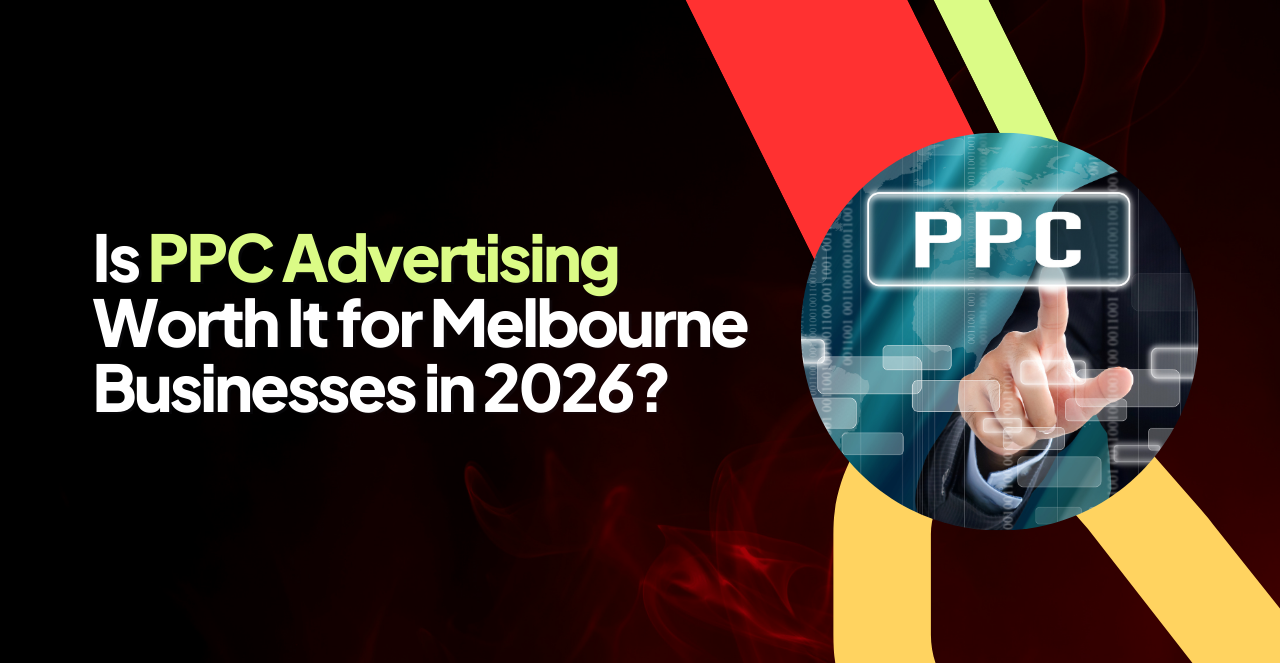
PPC advertising has been a core growth channel for Melbourne businesses for more than a decade. However, as we move into 2026, the landscape looks very different from even three or four years ago. Costs are higher, competition is more aggressive, and automation plays a much larger role in how campaigns perform.
For Melbourne SMEs, the question is no longer whether PPC can work, but whether it is still worth the investment compared to other marketing channels. Business owners want predictable ROI, qualified leads, and transparency, not just clicks and impressions.
This article breaks down the reality of PPC advertising in Melbourne for 2026. We will look at how PPC has evolved, what the real cost versus ROI looks like, when it makes sense to invest, and when it does not. The goal is to help you make an informed decision based on strategy, not hype.
What PPC Delivers Today vs Past Years

PPC advertising in 2026 is more automated, more competitive, and more data-driven than ever before. In earlier years, businesses could rely on manual bidding, simple keyword targeting, and basic ads to generate results. Today, platforms like Google Ads and Microsoft Ads rely heavily on machine learning and intent signals.
For Melbourne businesses, this shift has both advantages and challenges. On one hand, modern PPC can deliver highly qualified traffic by analysing user behaviour, device signals, location, and past interactions. On the other hand, it leaves less room for error. Poor tracking, weak landing pages, or unclear offers are punished quickly.
Another key difference is user behaviour. Searchers are more informed and comparison-driven. PPC ads must now compete not only with other advertisers, but also with maps, shopping results, AI summaries, and organic listings.
What PPC delivers today is not cheap traffic, but controlled demand capture. Businesses that adapt their strategy to this reality see consistent lead flow. Those relying on outdated tactics often see rising costs without proportional returns.
Cost vs ROI Reality in Melbourne

The cost of PPC advertising in Melbourne has increased across most industries. This is driven by higher competition, more advertisers entering the market, and greater reliance on paid channels for immediate growth.
However, a higher cost does not automatically mean lower ROI. The key is understanding where ROI actually comes from. PPC ROI is determined by the relationship between click cost, conversion rate, lead quality, and lifetime customer value.
In Melbourne, industries such as trades, professional services, healthcare, and B2B services still see strong returns when campaigns are structured properly. Businesses that track phone calls, form submissions, and bookings accurately are able to optimise profitable outcomes.
Common reasons PPC feels unprofitable include:
- Poor conversion tracking
- Sending traffic to generic pages
- Chasing volume instead of intent
- Measuring success only by clicks
The reality is that PPC in Melbourne is no longer forgiving. ROI exists, but only for businesses willing to treat paid advertising as a performance channel rather than an experiment.
When PPC Works and When It Doesn’t
PPC advertising is not a universal solution. It works exceptionally well in certain scenarios and poorly in others. Understanding this distinction is critical for Melbourne businesses planning their 2026 marketing budgets.
PPC works best when:
- There is clear search intent for your service
- Your offer solves an immediate problem
- You can respond quickly to leads
- Conversion tracking is set up correctly
It struggles when:
- The service requires long education cycles
- Margins are too thin to absorb click costs
- Landing pages lack clarity or trust signals
- Businesses expect instant profitability without testing
Melbourne SMEs often succeed with PPC when it is aligned with business operations. A campaign generating ten high-quality leads per week is far more valuable than one generating fifty low-intent enquiries.
PPC is a lever. Pulled at the right time with the right setup, it accelerates growth. Pulled blindly, it amplifies inefficiencies.
PPC vs Other Channels
One of the biggest mistakes businesses make is comparing PPC in isolation. In reality, PPC should be evaluated alongside other channels such as SEO, social media advertising, and content marketing.
Compared to SEO, PPC offers speed and control. SEO takes time, but compounds long-term value. PPC delivers immediate visibility, but stops when spending stops. Many Melbourne businesses use PPC to bridge gaps while organic traffic grows.
Compared to social media ads, PPC captures existing demand rather than creating it. Search users are actively looking for solutions, which often results in higher intent leads.
Compared to other online ads, PPC provides clearer attribution. Businesses can track cost per lead, cost per acquisition, and ROI more accurately than most channels.
The most effective strategies in 2026 combine PPC with other channels rather than choosing one exclusively.
Realistic Expectations for 2026

PPC advertising in 2026 requires realistic expectations. It is not a guaranteed profit machine, nor is it obsolete. It is a mature, competitive channel that rewards strategy and discipline.
Melbourne businesses should expect:
- A learning phase before optimisation
- Fluctuating costs based on competition
- Better results with strong landing pages
- Improved performance with data-driven decisions
Businesses that succeed view PPC as an ongoing system, not a one-time setup. Regular analysis, testing, and refinement are essential.
Those expecting instant, hands-off returns often conclude PPC is not worth it. Those who invest in structure and insight often find it becomes one of their most predictable growth channels.
Get a PPC ROI Forecast from Adcept Marketing
If you are considering PPC advertising in Melbourne for 2026, the smartest first step is understanding what ROI could realistically look like for your business. Adcept Marketing provides data-driven PPC forecasts that factor in industry benchmarks, competition, and conversion potential, helping you decide before you spend.
Key Takeaways
- PPC advertising in Melbourne is more competitive but still effective
- ROI depends on tracking, intent, and conversion quality
- PPC works best for businesses with clear offers and margins
- It should complement, not replace, other marketing channels
- Realistic expectations are essential for success in 2026
Frequently Asked Questions
Is PPC still profitable for Melbourne businesses in 2026?
Yes, but only when campaigns are structured properly and optimised for conversions rather than traffic volume.
How much should Melbourne businesses spend on PPC?
Budgets should align with lead value and capacity. Many SMEs start with controlled budgets and scale once ROI is proven.
Is PPC better than SEO in 2026?
They serve different purposes. PPC delivers immediate visibility, while SEO builds long-term authority. The strongest strategies use both.
How long does PPC take to show results?
Initial leads can appear within days, but meaningful optimisation usually takes several weeks of data.