Skip to content



Learn how to read Google Search Console’s generative AI performance report, track AI Overviews visibility and measure AI traffic in GA4.
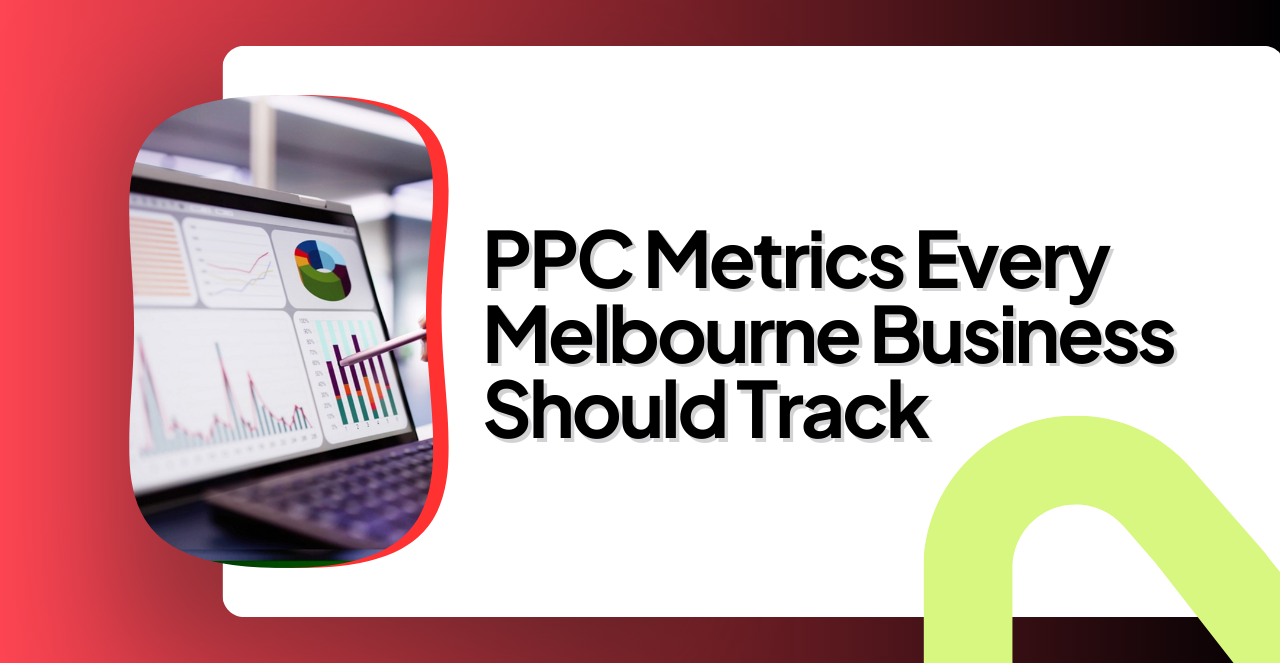
Running Google Ads without tracking the right PPC metrics is like driving through Melbourne traffic with no dashboard lights. Many businesses focus on surface-level numbers like clicks and impressions, while missing the metrics that actually determine profitability.
Melbourne markets are competitive across most industries. Higher cost per click means every decision must be backed by data. Tracking the right Google Ads KPIs helps businesses understand what is working, what is wasting budget, and where growth opportunities exist.
PPC metrics are not just for agencies or advanced advertisers. Business owners, marketing managers, and founders all benefit from understanding how campaigns perform beyond vanity numbers. When metrics are reviewed consistently, paid advertising becomes a predictable growth channel rather than an unpredictable expense.
Click Through Rate Shows Ad Relevance, Not Success
Click-through rate is one of the most commonly tracked PPC metrics, but it is also one of the most misunderstood. A high click-through rate simply means users find your ads relevant enough to click. It does not guarantee conversions or revenue.
In Melbourne, click-through rates can be inflated by competitive bidding and broad keyword targeting. Ads may attract curiosity clicks without commercial intent, especially in research-heavy industries.
Click-through rate is useful for:
- Measuring ad relevance
- Comparing ad copy variations
- Identifying keyword mismatches
However, a high click-through rate paired with low conversions often signals a disconnect between ad messaging and landing page experience. CTR should always be analysed alongside conversion metrics, not in isolation.
Cost Per Click Reflects Market Competition

Cost per click is one of the most important PPC metrics for Melbourne businesses because it reflects how competitive your market really is. High CPCs are common in legal, trades, finance, and professional services.
Monitoring cost per click helps businesses:
- Understand budget requirements
- Identify expensive keywords that underperform
- Improve Quality Score to reduce costs
Rising CPCs are not always a problem if conversion rates and lead quality remain strong. Problems occur when costs rise but conversions do not follow. This is why CPC should always be evaluated in context with conversion data and return metrics.
Conversion Rate Is the True Performance Indicator

Conversion rate is one of the most critical Google Ads KPIs. It measures how effectively clicks turn into actions such as form submissions, calls, or purchases.
Low conversion rates are common when:
- Landing pages are not optimised
- Forms are too long
- Messaging lacks clarity
- Trust signals are missing
Melbourne users are time-conscious and value transparency. A strong conversion rate usually indicates that ads, landing pages, and offers are aligned with local intent.
Improving conversion rate often delivers better results than increasing traffic. Small improvements here can dramatically reduce cost per lead and improve campaign scalability.
Cost Per Conversion Protects Profitability

Cost per conversion shows how much you are paying for each lead or sale. This is one of the most practical PPC metrics for decision making because it directly affects margins.
Tracking cost per conversion helps businesses:
- Compare campaign performance
- Identify scalable ad groups
- Pause unprofitable keywords
In Melbourne markets, the cost per conversion varies widely by industry. What matters is not how low it is, but whether it aligns with your customer lifetime value.
Businesses serious about growth often work with specialists offering paid advertising services to continuously optimise cost per conversion and maintain profitability.
Conversion Value and ROAS Measure Real Growth

For e-commerce and high-value lead-generation businesses, conversion value and return on ad spend provide deeper insight than basic lead counts.
These metrics answer critical questions:
- Are ads generating profitable revenue
- Which campaigns drive the highest value
- Where the budget should be increased
ROAS is especially useful when combined with CRM and automation systems. Topics covered in CRM automation workflow explain how integrating ad platforms with backend systems improves data accuracy and decision-making.
Impression Share Reveals Missed Opportunities

Impression share shows how often your ads appear compared to how often they could appear. Low impression share can indicate limited budgets, low bids, or poor Quality Scores.
For Melbourne businesses, impression share highlights:
- Growth opportunities within existing campaigns
- Budget constraints limiting reach
- Competitive pressure from other advertisers
Monitoring impression share helps identify when scaling is possible and when optimisation is needed before increasing spend.
Quality Score Impacts Every PPC Metric

Quality Score affects cost per click, ad visibility, and overall performance. It is influenced by ad relevance, expected click-through rate, and landing page experience.
Improving Quality Score leads to:
- Lower CPCs
- Higher impression share
- Better ad positioning
Many businesses ignore Quality Score because it feels abstract, but consistent optimisation here compounds performance improvements across all PPC metrics.
Conclusion
Tracking the right PPC metrics transforms Google Ads from a guessing game into a structured growth system. Melbourne businesses that monitor meaningful KPIs make faster decisions, reduce waste, and scale with confidence.
Clicks and impressions provide surface-level insight, but conversions, costs, and value determine long-term success. When metrics are reviewed regularly and acted upon, paid advertising becomes one of the most controllable growth channels available.
Key Takeaways
- Click-through rate shows relevance, not profitability
- Cost per click reflects Melbourne market competition
- Conversion rate is the strongest performance indicator
- Cost per conversion protects margins
- ROAS measures real business impact
- Impression share reveals scaling opportunities
Frequently Asked Questions
What are the most important PPC metrics to track?
Conversion rate, cost per conversion, and return on ad spend are the most important for most Melbourne businesses.
Is click-through rate a reliable success metric?
It is useful for relevance testing but should never be analysed alone.
How often should PPC metrics be reviewed?
Weekly reviews are ideal for active campaigns, with monthly performance analysis for trends.
Do small businesses need advanced PPC tracking?
Yes. Accurate tracking prevents wasted spend and improves decision-making regardless of business size.
Should PPC metrics be linked to CRM data?
Linking PPC data with CRM systems provides clearer insight into lead quality and revenue impact.