Skip to content


Learn how to read Google Search Console’s generative AI performance report, track AI Overviews visibility and measure AI traffic in GA4.
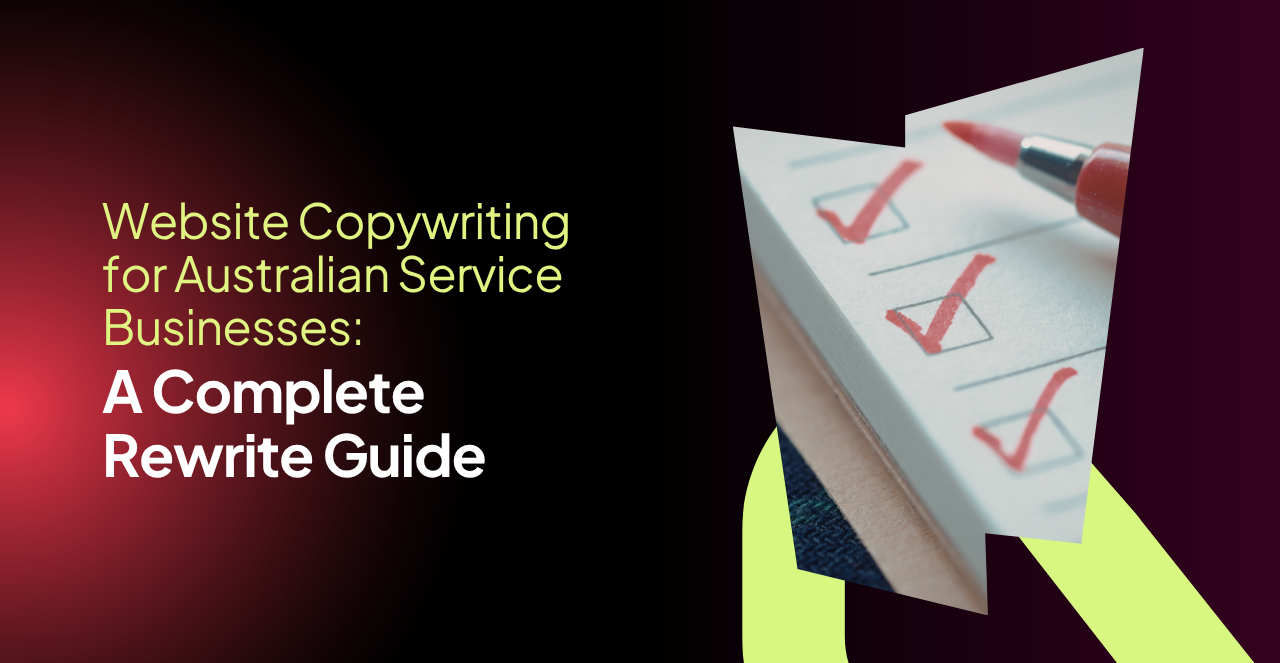
For most Australian service businesses, the website is supposed to do one thing well: turn visitors into enquiries. Yet in reality, it often does the opposite. People land on the page, scroll briefly, and leave without taking action. The issue is rarely traffic. It is almost always the copy.
Service businesses operate differently from product businesses. You are not selling something tangible; you are selling trust, expertise, and outcomes. That means your website copy has to do more than describe what you do. It needs to guide a potential customer through uncertainty, answer unspoken questions, and build confidence in your ability to deliver.
The challenge is that many websites are written once and never revisited. They are built around what the business wants to say, not what the customer needs to hear. Over time, this creates a disconnect between your messaging and your market.
This guide walks you through how to rewrite your website copy strategically. It is not about small tweaks. It is about restructuring your entire message so that it aligns with how Australian customers think, evaluate, and decide. When done properly, this becomes one of the highest return investments you can make in your marketing.
Why Most Service Business Websites Underperform

Most service-based websites in Australia look polished, but they lack one critical element: conversion clarity. They present information but do not guide decisions.
The biggest issue is perspective. Businesses write about themselves, their history, their services, and their process. Customers, on the other hand, are focused on their own problems. When the copy does not bridge that gap, engagement drops.
Another common problem is generic messaging. Statements like “we provide high-quality services” or “trusted by many clients” do not differentiate you. They are expected, not persuasive. Customers need specifics to feel confident.
There is also a tendency to overload pages with information. Long paragraphs, unclear structure, and multiple competing messages make it difficult for users to process what they are reading. When clarity is lost, conversions follow.
Finally, many websites fail to address objections. Potential customers have concerns about cost, results, timelines, and risk. If your copy does not proactively answer these, they will hesitate or leave.
This is why a structured rewrite matters. It allows you to shift from passive information to active persuasion, without sounding pushy or unnatural.
Understanding the Australian Buyer Mindset

Before rewriting your website, you need to understand how Australian customers make decisions. This is where many businesses go wrong. They apply generic copywriting frameworks without adapting them to local expectations.
Australian audiences tend to value authenticity over hype. They prefer direct communication, practical benefits, and honest claims. Overly aggressive or exaggerated messaging often reduces trust rather than building it.
What Australian Customers Respond To
- Clear and straightforward language
- Evidence of real results
- Specific examples rather than vague claims
- A sense of reliability and consistency
What Turns Them Away
- Over-the-top promises
- Complex jargon or technical language
- Long-winded explanations without clear outcomes
- Sales-heavy or pushy tone
This means your copy needs to strike a balance. It should be persuasive, but grounded. Confident, but not exaggerated.
When rewriting your website, always ask yourself, does this sound like something a real person would say, or does it sound like marketing? The closer you are to natural language, the better your copy will perform.
The Core Structure of a High-Converting Service Page

A well-written service page follows a logical structure. It mirrors the way a customer thinks, from initial interest to final decision.
Hero Section, First Impression Matters
The hero section is what users see first. It should clearly communicate what you do, who it is for, and what outcome you deliver. This needs to happen within seconds.
A strong hero section includes:
- A clear headline focused on the outcome
- A supporting line that explains how you deliver it
- A single, prominent call to action
Problem and Context
After the hero, the page should show that you understand the customer’s situation. This builds immediate connection and relevance.
Solution and Approach
This is where you explain how your service works. Keep it simple and focused on outcomes, not just processes.
Proof and Credibility
Social proof plays a major role in decision-making. Testimonials, case studies, and client examples help reduce perceived risk.
Here’s How to Do It Right
The page should guide the reader toward a single action. Whether it is booking a call or requesting a quote, the next step should be obvious.
If you want to ensure your pages follow this structure effectively, working with expert website copywriting services for Australian businesses can help translate strategy into results.
Step-by-Step Website Copy Rewrite Process
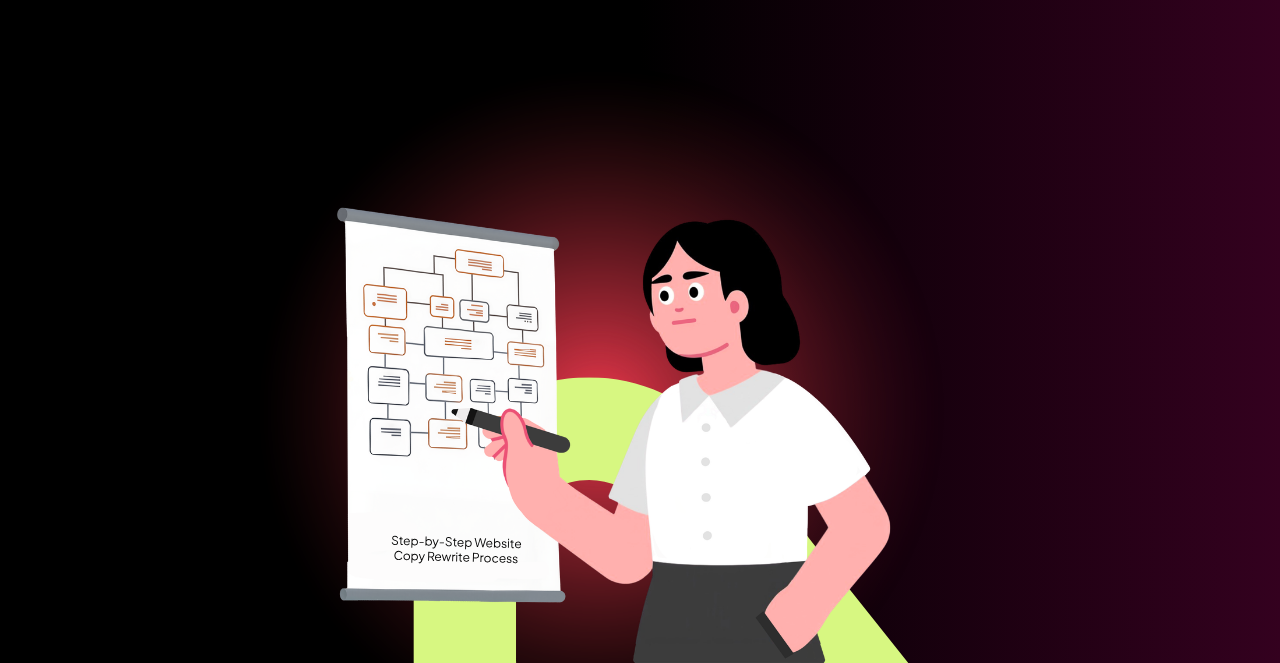
Rewriting your website should be done systematically, not randomly. Each step builds on the previous one.
Step 1: Audit Your Existing Pages
Start by reviewing your current content. Identify pages with high traffic but low conversion. These are your priorities.
Step 2: Define Your Audience and Offer
Clarify who you are targeting and what problem you solve. This should guide all messaging decisions.
Step 3: Rewrite Headlines First
Headlines have the biggest impact on engagement. Focus on clarity and outcomes rather than clever wording.
Step 4: Simplify Your Messaging
Remove unnecessary words and focus on what matters. Each sentence should add value.
Step 5: Add Strategic Proof
Include testimonials, data points, and real examples. This builds trust quickly.
Step 6: Align Calls to Action
Ensure each page has a clear goal. Avoid multiple competing actions.
Step 7: Review and Refine
Once rewritten, test performance and make adjustments based on real data.
This process ensures that your website evolves from a static brochure into a dynamic sales tool.
Writing Benefits Instead of Features

One of the most common mistakes in website copy is focusing too much on features. While features explain what you do, benefits explain why it matters.
For example, saying “we offer SEO services” is a feature. Saying “we help your business rank higher and generate consistent enquiries” is a benefit.
Customers are not buying your service. They are buying the outcome it delivers.
How to Shift to Benefit-Focused Copy
Start by asking:
- What problem does this feature solve
- What result does it create for the customer
- How does it improve their situation
Then translate that into simple, clear language.
This shift alone can significantly improve how your website performs. It makes your messaging more relevant and more persuasive.
Using Proof to Build Trust and Reduce Risk
Trust is one of the biggest factors in service-based decisions. Unlike products, services involve uncertainty. Customers cannot see or test what they are buying up front.
This is why proof is essential.
Types of Proof That Work
- Client testimonials with specific results
- Case studies showing before and after outcomes
- Industry experience and expertise
- Numbers and data where possible
Specificity is key. Saying “we have helped many clients” is weak. Saying “we helped 47 Melbourne-based businesses increase enquiries by over 60 percent” is powerful.
Proof reduces risk in the customer’s mind. It shows that your service delivers real results, not just promises.
For businesses looking to strengthen their positioning, partnering with a results-driven agency like Adcept Marketing can help structure and present proof effectively within your website.
Aligning Copy With the Customer Journey
Not every visitor is ready to convert immediately. Some are researching, others are comparing options, and some are ready to take action.
Your website copy needs to cater to all these stages.
Awareness Stage
At this stage, the focus is on education and clarity. Explain the problem and introduce your solution.
Consideration Stage
Here, customers are evaluating options. This is where proof, differentiation, and detailed explanations matter.
Decision Stage
At this point, customers need reassurance. Address objections, highlight guarantees, and make the next step easy.
By aligning your copy with these stages, you create a smoother path to conversion. Each section of your website plays a role in moving the reader forward.
Conclusion
Your website is your most powerful salesperson, and for most Australian service businesses, it is badly underperforming. A systematic rewrite that applies conversion architecture, addresses real objections, and speaks directly to the customer’s desired outcome is the highest-ROI investment you can make in your marketing. Adcept’s copywriting process is built on a genuine understanding of your customer’s decision journey, not generic templates.
Key Takeaways
- The hero section must communicate your value within seconds
- Customers buy outcomes, not features
- Specific messaging builds trust faster than generic claims
- Your page structure should follow the reader’s decision process
- Every paragraph should serve a clear purpose, inform, build trust, address objections, or drive action
FAQs
In what order should I rewrite my website pages?
Start with your highest-traffic pages, especially your home page and key service pages. These offer the greatest potential for improvement. Use analytics tools to identify where your visitors are landing and prioritise those pages.
Should I use first or third person in business copywriting?
First-person creates a more personal and relatable tone, which works well for service businesses. However, the second person should dominate. Your copy should focus on the reader, not the business.
How often should I update my website copy?
Review your high-traffic pages every three months. If a page has strong traffic but low conversions, it should be prioritised for a rewrite. Pages that perform well should remain unchanged.
Do I need professional help for website copywriting?
While you can write your own copy, working with experienced professionals can significantly improve results. They bring structure, strategy, and an external perspective.
How long does a full website rewrite take?
It depends on the size of your website, but most projects take between two to six weeks. The focus should be on quality rather than speed.