Skip to content


Learn how to read Google Search Console’s generative AI performance report, track AI Overviews visibility and measure AI traffic in GA4.
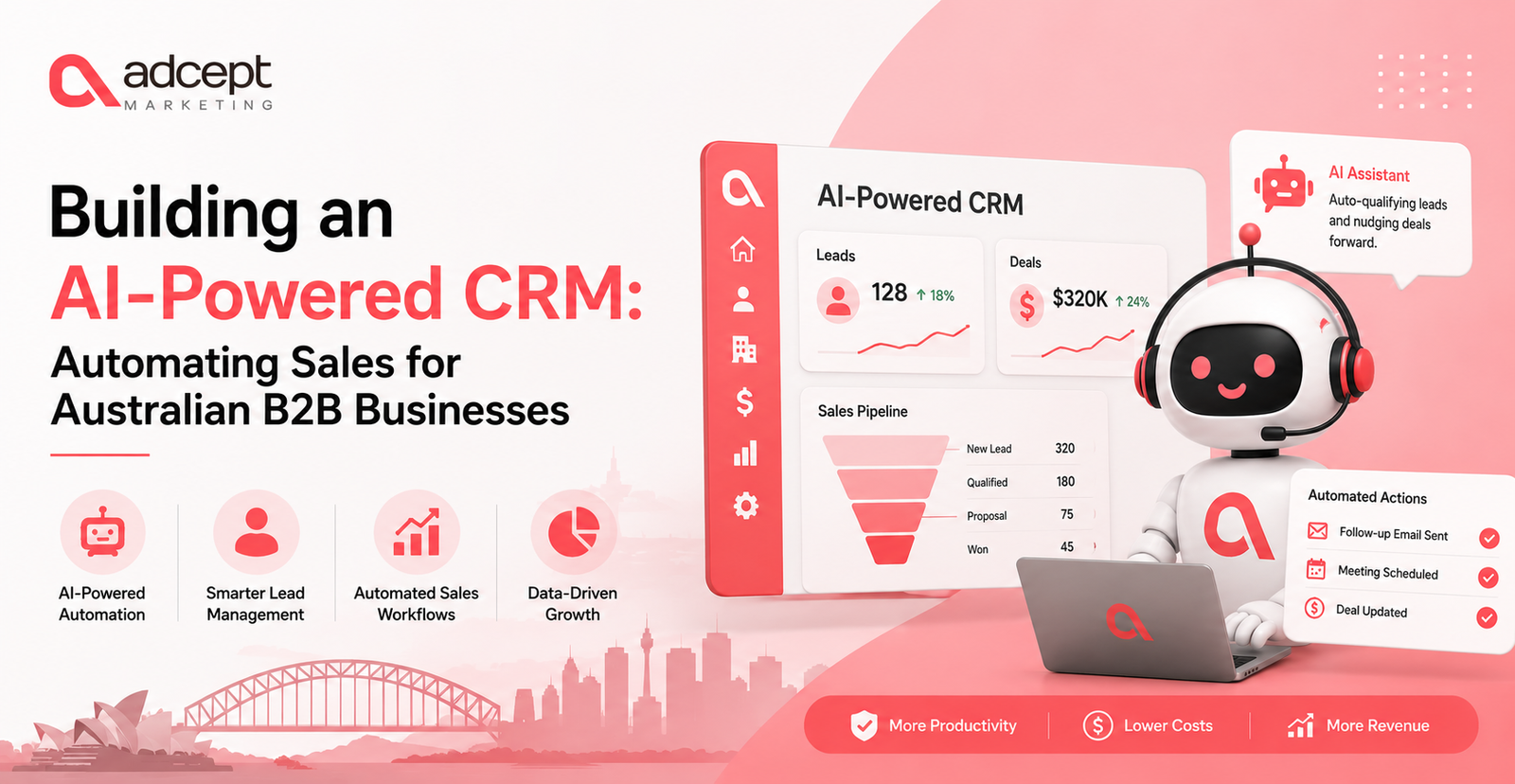
In today’s competitive B2B landscape, Australian businesses are constantly seeking ways to optimise their sales processes and drive more revenue. One of the most effective ways to achieve this is by integrating AI-powered CRM systems. These systems go beyond simply storing customer data; they can automate essential sales tasks, generate actionable insights, and even predict future customer behaviours.
But why is this so important for Australian B2B businesses? The difference between a traditional CRM system and one enhanced with AI is substantial. A traditional CRM is essentially a sophisticated contacts database. However, with AI automation, your CRM transforms into an active revenue engine, empowering your sales team to focus on what truly matters: building relationships and closing deals.
In this article, we’ll explore how AI-powered CRMs are revolutionising the sales process for Australian B2B businesses, how to integrate AI into your CRM, and the benefits it brings to sales teams looking to scale and optimise operations.
What Is an AI-Powered CRM?
A CRM (Customer Relationship Management) system is a tool that businesses use to manage interactions with potential and existing customers. It allows companies to store customer information, track interactions, and manage sales pipelines.
When AI is integrated into a CRM system, it adds layers of automation and intelligence that streamline and optimise tasks, such as:
- Automating data entry and follow-ups
- Scoring leads based on their engagement
- Offering actionable insights to guide sales strategies
- Recommending next steps for sales teams based on data patterns
In short, an AI-powered CRM can work autonomously to handle the repetitive tasks that often burden sales teams, freeing them up to focus on high-priority activities like engaging with quality leads and closing deals.
Benefits of AI in CRM for Australian B2B Businesses
For Australian businesses operating in competitive sectors, adopting an AI-powered CRM system offers several key advantages. From time savings to enhanced decision-making, here’s how AI is transforming the way sales teams work.
1. Lead Scoring and Prioritisation
One of the most valuable aspects of AI in a CRM is the ability to score leads based on their likelihood to convert. By analysing past behaviour, engagement history, and demographic data, AI can predict which leads are most likely to close and suggest prioritisation strategies for your sales team.
- Example: AI evaluates which leads have visited your website most frequently, downloaded key content, or engaged with your emails. Based on this data, it assigns a score to each lead, helping your team focus on high-value prospects.
This removes the guesswork from the sales process and ensures that your team is always focused on the most promising opportunities.
2. Automating Repetitive Sales Tasks
Sales teams often spend a significant portion of their time on repetitive tasks like entering contact information, scheduling follow-ups, and creating reports. AI can automate these processes, allowing salespeople to spend more time building relationships with prospects and less time on administrative work.
- Example: AI can automatically log meeting notes, follow up with customers after a call, and send reminders for meetings, all without manual intervention.
This automation improves efficiency and ensures that no leads fall through the cracks due to overlooked administrative tasks.
3. Smarter Data-Driven Decisions
AI-powered CRMs can analyse large amounts of data and generate insights that human teams might miss. By processing customer interactions and behaviours, AI provides sales teams with actionable recommendations and predictions to improve strategy and decision-making.
- Example: An AI-powered CRM can analyse previous interactions and forecast the best time to follow up with a lead or recommend specific products based on their past behaviour.
These insights help your sales team make smarter, data-driven decisions that are more likely to lead to successful outcomes.
4. Improved Customer Segmentation
Effective customer segmentation is key to any B2B sales strategy. AI can help segment your customers based on multiple factors, such as their buying behaviours, industry, size, or geographical location, allowing your sales team to tailor their approach accordingly.
- Example: AI could segment leads into categories like “hot leads,” “warm leads,” or “cold leads” based on interaction history. This allows your team to apply the appropriate sales strategy for each segment.
With improved segmentation, sales efforts become more targeted and personalised, leading to higher conversion rates.
5. Personalised Communication at Scale
Personalisation is one of the best ways to engage potential customers. However, when managing large numbers of leads, it can be challenging to personalise communication for each individual. AI can automate personalised outreach based on customer data, ensuring that every prospect receives a message that is relevant and timely.
- Example: AI can automatically send personalised emails to leads based on their previous interactions with your business, addressing their specific pain points and offering relevant solutions.
This level of personalisation ensures a stronger connection with potential customers and increases the chances of conversion.
How to Integrate AI into Your Existing CRM System
Implementing AI into your existing CRM system doesn’t have to be a complicated process. With the right approach and tools, Australian businesses can easily integrate AI and begin reaping the benefits.
1. Choose the Right CRM with AI Capabilities
The first step in integrating AI into your CRM is selecting the right platform. Some of the most popular CRM systems with built-in AI functionality include HubSpot, Salesforce, and Pipedrive. These platforms offer AI-powered features like lead scoring, data analysis, and predictive insights.
- Tip: For Australian SMEs, HubSpot offers an affordable and comprehensive AI-powered CRM that can automate lead nurturing, follow-ups, and reporting with ease.
2. Integrate AI Tools with Your CRM
For businesses using an existing CRM, there are plenty of third-party AI tools that can be integrated. Tools like Make, n8n, and Zapier offer robust automation and AI features that can work seamlessly with popular CRM platforms like Salesforce, HubSpot, and Pipedrive.
- Example: You can integrate Make or n8n with your CRM to automate data entry, lead qualification, and follow-up tasks using AI-powered workflows.
These integrations enable your team to leverage AI capabilities without having to completely replace their existing CRM system.
3. Train Your AI for Better Results
AI systems work best when they are trained using real customer data. Once you have integrated AI into your CRM, it’s important to feed it data so it can learn and improve its predictions. AI models can get smarter over time by analysing customer interactions and adapting to new trends.
- Tip: Regularly review and update your CRM data to ensure that the AI is working with the most accurate and up-to-date information.
The more data you provide, the better your AI will perform in automating tasks and providing actionable insights.
How AI-Powered CRMs Benefit Australian B2B Sales Teams
AI-powered CRMs offer a range of advantages to Australian B2B businesses looking to optimise their sales processes and drive revenue growth. Here’s how AI can be a game-changer for your sales team:
- Faster Sales Cycles: By automating lead qualification and follow-ups, AI helps speed up the sales cycle, allowing your team to close deals faster.
- Increased Lead Conversion Rates: With AI-driven insights and lead scoring, your sales team can focus on the most promising leads, improving conversion rates.
- Better Customer Insights: AI offers detailed analytics and predictive insights, helping businesses understand customer behaviour and improve engagement strategies.
- Enhanced Collaboration: AI-powered CRMs provide shared insights and collaboration features, enabling your sales team to work together more effectively.
These benefits not only improve operational efficiency but also help businesses build stronger relationships with customers, ultimately driving long-term growth.
Conclusion
In the fast-paced world of B2B sales, AI-powered CRMs are transforming the way Australian businesses manage their customer relationships. By automating lead qualification, follow-ups, and data analysis, AI systems enable sales teams to focus on high-value tasks and close more deals.
With the ability to scale operations, improve efficiency, and provide actionable insights, AI-powered CRMs are becoming essential tools for B2B businesses looking to stay competitive in the Australian market. Whether you’re just starting with CRM automation or looking to optimise your existing systems, adopting AI can provide the competitive edge your business needs to thrive.
At Adcept, we specialise in helping Australian businesses integrate AI into their CRM systems, ensuring seamless automation and better sales performance.
Key Takeaways
- AI-powered CRMs help automate repetitive tasks, freeing up sales teams for high-value interactions.
- AI can improve lead scoring, follow-ups, and customer insights, increasing sales conversion rates.
- Businesses can integrate AI into their existing CRM systems using tools like Make, n8n, and Zapier.
- AI-powered CRMs help improve customer satisfaction by delivering personalised, timely responses.
FAQs
What CRM systems work best with AI automation in Australia?
Popular AI-integrated CRM systems include HubSpot, Salesforce, and Pipedrive. For Australian SMEs, HubSpot offers a cost-effective, feature-rich solution.
What CRM tasks can be automated with AI?
AI can automate tasks like lead scoring, contact enrichment, follow-up scheduling, CRM data logging, performance reporting, and re-engagement sequences.
How do I get my sales team to use an automated CRM?
Build automations that eliminate tedious tasks like data entry and scheduling, and provide insights that help salespeople make informed decisions. Ensure the AI provides valuable information that reduces manual work.
How much time will AI automation save for my sales team?
On average, AI-powered CRMs save sales teams 10–25 hours of manual work per week, allowing them to focus more on customer engagement and closing deals.
How do I start using AI automation in my CRM?
Begin by automating low-complexity tasks like lead qualification or follow-ups. As you see results, expand to more complex processes. Working with an automation expert can help optimise your implementation.