Skip to content



Learn how to read Google Search Console’s generative AI performance report, track AI Overviews visibility and measure AI traffic in GA4.
Marketing automation is no longer a luxury for businesses; it’s a necessity. With the increasing volume of marketing tasks and content, Australian businesses are turning to automation to streamline their operations. Automation frees up time for teams to focus on strategic initiatives, rather than spending hours on repetitive tasks.
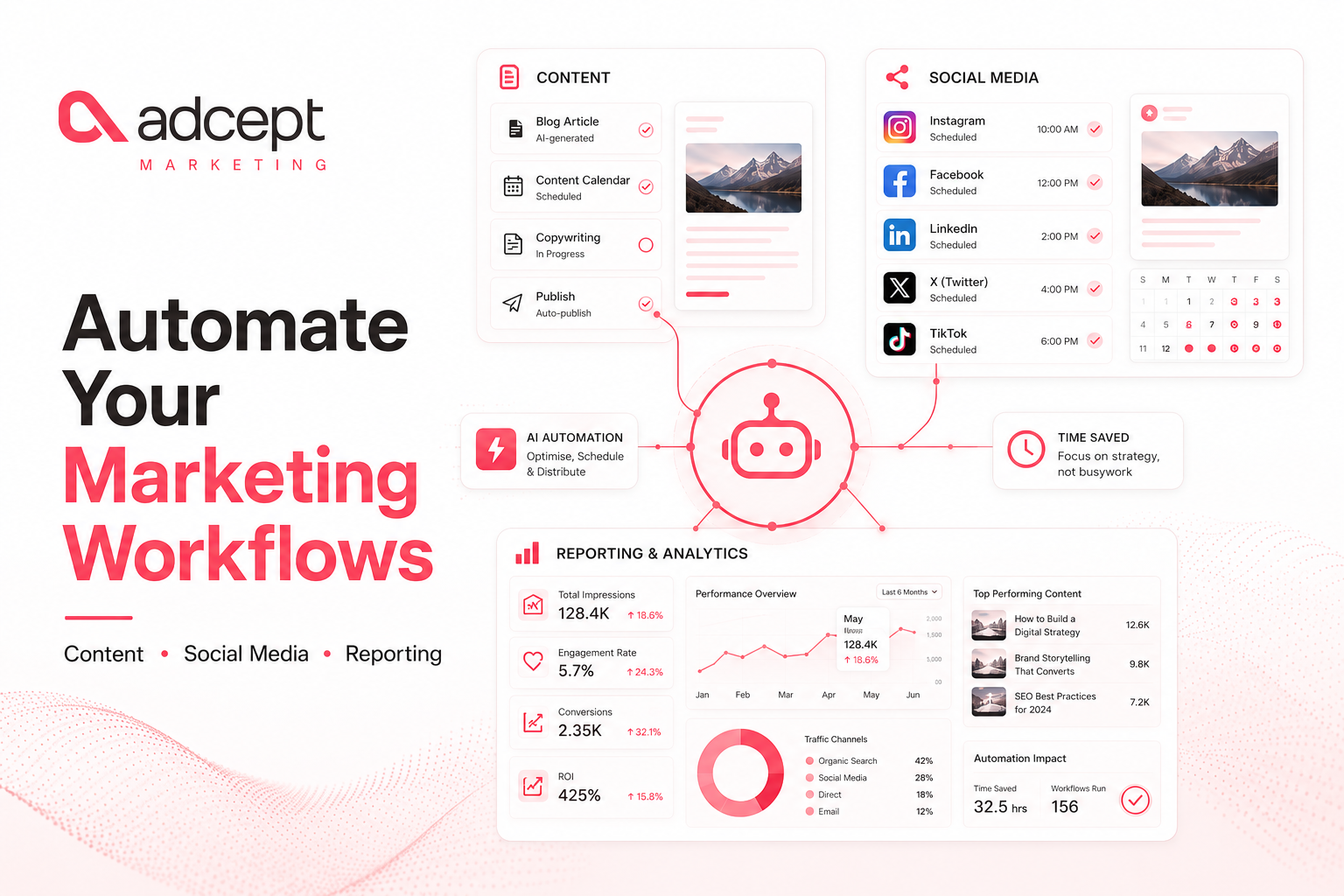
From content creation and social media scheduling to performance reporting and campaign setup, marketing automation tools can handle the heavy lifting. In this article, we will explore how you can automate key marketing workflows to save time, improve efficiency, and ultimately drive better results for your business.
Why Automate Marketing Workflows?
Marketing teams are often overwhelmed by the workload required to keep campaigns running smoothly. Tasks like creating and distributing content, scheduling social media posts, and generating reports can consume a significant amount of time. By automating these processes, marketing teams can focus on higher-value activities like strategy, analysis, and creative work.
Key Benefits of Marketing Automation
- Time Savings: Automation takes over the repetitive tasks, freeing up marketing professionals to focus on strategy and creativity.
- Increased Efficiency: Automated workflows ensure tasks are completed on time and without human error, improving consistency.
- Better Insights: Automated reporting provides real-time data, allowing businesses to make data-driven decisions faster.
- Scalability: As your business grows, automation allows you to scale marketing efforts without additional manual labour.
By automating routine tasks, Australian businesses can save up to 60% of their execution time, enabling a more strategic approach to marketing.
Automating Content Workflows: From Creation to Distribution
Content marketing is essential for driving traffic and engagement, but creating content and distributing it can be time-consuming. AI-powered automation tools can streamline the entire content workflow, from creation to scheduling, publishing, and repurposing.
1. Content Repurposing
Repurposing content is an effective way to get more value from existing assets. However, manually repurposing content can be tedious and time-consuming. AI-powered tools can help automate this process by converting blog posts, articles, or videos into multiple formats for different platforms.
- Automated repurposing: AI tools can generate social media posts, email summaries, and video scripts from a single long-form piece of content.
- Example: A blog post can be transformed into Instagram captions, a LinkedIn article, and an email newsletter automatically.
2. Content Scheduling and Publishing
AI automation tools can schedule and publish content across multiple platforms, ensuring that posts go live at the optimal times for your target audience. These tools can be integrated with social media management platforms, reducing the need for manual posting.
- Scheduling: Set specific dates and times for content to be published across social media channels and blogs.
- Cross-channel publishing: Ensure that content is published consistently across all platforms without the need for manual intervention.
Automating content distribution ensures your audience stays engaged without overwhelming your marketing team.
3. AI-Generated Content
AI tools like OpenAI and Claude can help generate content for specific marketing needs. These tools can write blog posts, create product descriptions, and even generate social media captions, saving your team time and effort while maintaining a consistent voice.
- Content Drafting: AI can create drafts that your team can refine, reducing the time spent on initial content creation.
- Content Optimisation: AI can also suggest SEO optimisations, including keyword recommendations, headline improvements, and content length adjustments.
Automating Social Media Marketing: Scheduling, Posting, and Engagement
Social media marketing is an integral part of any digital marketing strategy. However, managing multiple platforms, posting regularly, and engaging with followers can be overwhelming. Marketing automation helps streamline this process, improving consistency and engagement without the need for constant manual intervention.
1. Social Media Scheduling and Posting
Social media management tools like Hootsuite, Buffer, and Sprout Social integrate with AI to automate scheduling and posting across different platforms. By setting up your content calendar and scheduling posts in advance, you can ensure consistent and timely content delivery.
- Automated scheduling: Set up content in advance for platforms like Facebook, Twitter, LinkedIn, and Instagram.
- Optimal post timing: AI algorithms can analyse your audience’s engagement patterns and suggest the best times for posting.
2. Social Media Engagement
AI tools can also automate social media engagement by responding to comments, liking posts, and even sending personalised messages. These tools can ensure that your brand remains active and responsive to customers without requiring constant monitoring.
- Comment automation: Respond to common questions or thank followers automatically.
- Personalised messages: Send personalised follow-ups to people who engage with your posts or join your community.
Automating social media management ensures that your team can stay engaged with customers without feeling overwhelmed.
Automating Marketing Reporting: Saving Time and Improving Decision-Making
Marketing reporting is essential for measuring campaign performance, but creating reports manually can take up valuable time. Automation simplifies the reporting process by pulling data from various platforms and generating comprehensive reports in real-time.
1. Performance Report Generation
AI-powered reporting tools can automatically generate detailed marketing reports by collecting data from your website, social media, email campaigns, and other marketing efforts. These reports can be tailored to show key metrics like conversion rates, engagement, and ROI.
- Automated reports: Set up reports that are generated regularly (e.g., weekly or monthly) and delivered to stakeholders.
- Customisable insights: Use AI to highlight trends, successes, and areas for improvement, providing actionable insights for decision-making.
2. Analytics and Optimisation
AI tools can also analyse marketing data to identify opportunities for optimisation. By automatically reviewing performance metrics and suggesting improvements, businesses can continuously optimise their marketing efforts.
- Real-time insights: AI can analyse campaign performance and adjust strategies in real-time, improving overall effectiveness.
- Predictive analytics: Leverage AI’s ability to predict trends and suggest future marketing strategies based on historical data.
Automating reporting not only saves time but also allows your team to focus on improving marketing strategies rather than compiling data.
Implementing Marketing Automation
Now that we’ve discussed the benefits of automating content, social media, and reporting workflows, let’s talk about how to implement marketing automation in your business.
1. Identify Time-Consuming Tasks
Start by identifying the tasks that consume the most time and manual effort. These are often the best candidates for automation. For example, if your team spends hours each week manually scheduling social media posts, this is a process that can be automated.
2. Choose the Right Tools
Selecting the right tools is crucial for successful automation. Depending on your business’s needs, you may require tools like Zapier, Make, n8n, or AI content generation platforms like OpenAI or Claude.
- Zapier: Best for automating simple workflows and connecting popular apps.
- Make: Ideal for complex workflows that require multiple steps and advanced logic.
- n8n: Best for businesses requiring full control over their automation infrastructure and custom integrations.
3. Start Small and Scale
It’s essential to start small and build on your success. Begin with one marketing workflow (e.g., content repurposing or social media scheduling), measure the results, and then expand to other areas.
4. Monitor and Optimise
After implementing automation, it’s important to monitor its performance and optimise as needed. Look at key metrics like time saved, improved response rates, and increased engagement. Use this data to refine your automation workflows and expand to new tasks.
Conclusion
Marketing automation is a game-changer for Australian businesses. By automating content creation, social media scheduling, and performance reporting, you can save significant time and resources while improving the effectiveness of your marketing efforts. Automation allows your team to focus on strategy, creativity, and high-value work, while AI-powered tools handle the repetitive tasks.
Whether you’re just starting to automate or looking to optimise your existing workflows, the benefits are clear: reduced manual work, improved efficiency, and better results. At Adcept, we specialise in helping businesses deploy automation systems tailored to their unique needs.
Key Takeaways
- Automating content distribution, social media scheduling, and reporting saves time and increases efficiency.
- Start with one marketing workflow and gradually expand as you see results.
- AI tools can automate content repurposing, social media engagement, and real-time reporting.
- Choose the right automation platform based on your business’s needs and technical expertise.
FAQs
What marketing tasks can be genuinely automated with AI?
AI can automate tasks like content repurposing, social media scheduling, lead nurturing email sequences, performance reporting, and keyword monitoring. Tasks requiring creative direction or strategy should still be handled by humans.
How do I automate social media without losing authenticity?
Automation handles the scheduling and publishing, but the content creation should still be reviewed by a human to ensure it aligns with your brand voice. AI can assist with drafting content but should not replace creativity.
What is the ROI of marketing automation for an Australian SME?
Adcept clients typically save 10–25 hours of manual work per week after implementing a full marketing automation stack. This results in significant cost savings and allows staff to focus on strategic tasks.
Can marketing automation be used for email marketing?
Yes, AI automation can be used for email marketing, including automating email sequences, sending personalised emails, and generating performance reports.
How do I get started with marketing automation?
Start by identifying time-consuming tasks, choose the right tools for your needs, and gradually automate processes one at a time. Always monitor performance and optimise your workflows based on data.