Skip to content


Learn how to read Google Search Console’s generative AI performance report, track AI Overviews visibility and measure AI traffic in GA4.
Driving traffic to your website is only half the job. What happens after someone clicks is where real results are made. For most Australian businesses, this is exactly where performance drops.
Landing pages are designed for a single purpose: conversion. Whether that means capturing leads, booking consultations, or generating enquiries, every element on the page should support that goal. Yet many businesses treat landing pages like standard web pages, adding menus, multiple messages, and unnecessary distractions.
The result is predictable. Visitors arrive, feel uncertain, and leave without taking action. This is especially true for cold traffic, people who have never heard of your business before. They are naturally sceptical and need more reassurance before committing.
Landing page copywriting is the discipline that bridges this gap. It is not about writing more; it is about structuring information to build trust, reduce friction, and guide decision-making.
This guide explains the framework that high-performing landing pages follow, specifically for Australian service businesses. It focuses on practical, proven strategies that turn cold visitors into qualified enquiries.
What Makes Landing Pages Different From Websites
A landing page is not just another page on your website. It is a focused conversion environment.
Unlike a homepage or service page, a landing page is built around a single objective. Every section, every sentence, and every design element should move the visitor closer to that goal.
Single Goal, No Distractions
Traditional websites often have multiple paths. Users can explore services, read blogs, or navigate to different sections. Landing pages remove these options to keep attention focused.
Designed for Cold Traffic
Most landing pages are used in paid campaigns. This means visitors are unfamiliar with your brand. They need more information, more reassurance, and clearer guidance.
Message Match Matters
The promise made in your ad must be reflected on the landing page. If there is a mismatch, trust drops immediately.
Faster Decision Path
Landing pages are structured to reduce decision time. Instead of browsing, users are guided step by step toward a specific action.
For businesses aiming to improve performance, applying a structured approach through landing page copywriting services in Australia can significantly increase conversion rates without increasing traffic.
The Psychology of Converting Cold Traffic
Cold traffic behaves differently from warm or returning visitors. They do not know your brand, they do not trust you yet, and they are evaluating risk.
Understanding this mindset is essential for effective landing page copy.
Initial Skepticism
Visitors are cautious. They question whether your offer is legitimate, relevant, and worth their time.
Need for Clarity
Confusion leads to exit. If your message is not immediately clear, users will not stay to figure it out.
Risk Evaluation
Every action involves perceived risk. This includes financial cost, time commitment, and uncertainty about results.
Desire for Proof
People look for validation. Testimonials, case studies, and data help reduce doubt.
Short Attention Span
Users make quick decisions. Your page needs to communicate value within seconds.
When your copy addresses these psychological factors, it becomes easier to guide users toward action. Instead of pushing for conversion, you are removing the barriers that prevent it.
The High-Converting Landing Page Framework
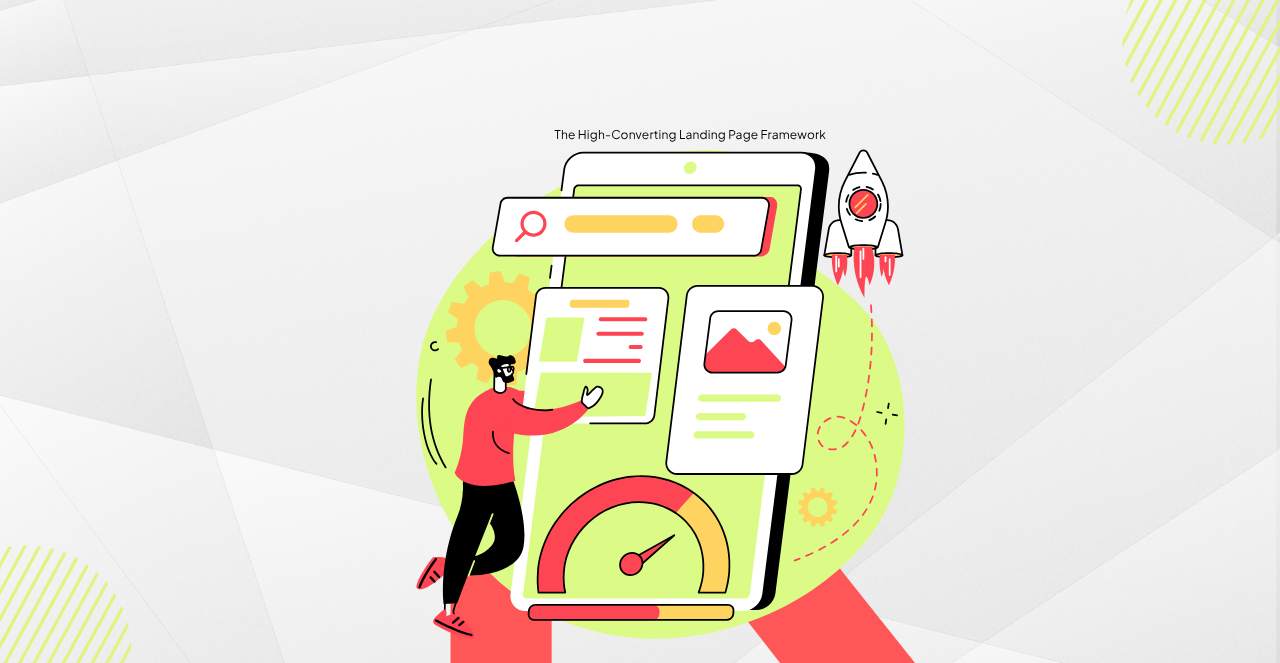
Effective landing pages follow a structured framework. This is not about creativity; it is about clarity and persuasion.
Hero Section, The First Impression
The hero section is the most important part of your page. It needs to answer three questions instantly:
- What are you offering
- Who is it for
- Why should they trust you
A strong headline and supporting subheading are critical here.
Problem and Agitation
Show that you understand the visitor’s situation. Highlight the challenges they are facing and why those problems matter.
Solution and Offer
Introduce your service as the solution. Focus on outcomes rather than processes.
Social Proof
Include testimonials, client results, or case studies. This builds credibility and reduces risk.
Risk Reversal
Offer guarantees, free consultations, or flexible terms. This lowers the barrier to action.
Call to Action
Guide users toward a single action. Make it clear, visible, and easy to complete.
This framework ensures that your page follows a logical progression, moving visitors from curiosity to confidence.
Writing Headlines That Drive Conversions
Your headline carries the majority of the persuasive weight. If it does not capture attention, the rest of your page will not be read.
What Makes a Strong Headline
A high-performing headline is:
- Clear rather than clever
- Focused on a specific outcome
- Relevant to the audience
For example, instead of saying “Professional Marketing Services”, a stronger headline would be “Generate Consistent Enquiries Without Increasing Ad Spend”.
Avoiding Common Mistakes
Generic headlines fail because they do not communicate value. Overly complex headlines fail because they create confusion.
Testing Variations
Different audiences respond to different messaging. Testing multiple headline variations helps identify what works best.
The headline sets the tone for the entire page. Getting it right can dramatically improve conversion rates.
Building Trust Through Social Proof and Credibility
Trust is the foundation of conversion, especially for cold traffic. Without it, even the best offers will struggle to perform.
Types of Social Proof
Effective forms of proof include:
- Client testimonials with specific results
- Case studies showing measurable outcomes
- Industry experience and credentials
Placement Matters
Social proof should be placed strategically throughout the page. Testimonials near the call to action are particularly effective.
Specificity Over Generalisation
Detailed proof is more convincing than broad statements. Saying “we helped 30 businesses increase leads by 50%” is stronger than “we have many satisfied clients”.
Reinforcing Credibility
Consistency across your messaging also builds trust. Aligning your landing page with your broader digital marketing strategy ensures a cohesive experience for users.
Trust reduces hesitation. The more confident visitors feel, the more likely they are to take action.
Reducing Friction With Risk Reversal
Even when users are interested, hesitation can prevent conversion. Risk reversal techniques help overcome this.
What Is Risk Reversal
Risk reversal reduces the perceived downside of taking action. It reassures users that they are making a safe decision.
Common Techniques
- Free consultations or audits
- No lock-in contracts
- Money-back guarantees
Why It Works
These elements remove fear. When users feel they have nothing to lose, they are more likely to engage.
Integrating Into Your Copy
Risk reversal should be clearly communicated, especially near the call to action. It reinforces confidence at the point of decision.
Reducing friction is one of the most effective ways to improve conversion rates without changing your offer.
Optimising Calls to Action for Maximum Impact
The call to action is where conversion happens. It needs to be clear, compelling, and easy to follow.
Clarity Over Creativity
Simple CTAs like “Book a Free Consultation” outperform vague phrases like “Get Started”.
Visibility and Placement
Your CTA should be visible throughout the page. Users should not have to search for it.
Reinforcing Value
Supporting text around the CTA should remind users of the benefits they will receive.
Minimising Effort
Forms should be simple and quick to complete. Asking for too much information can reduce conversions.
A well-optimised CTA removes uncertainty and encourages immediate action.
Conclusion
A landing page is the most high-stakes piece of copy in your entire marketing funnel. Every dollar spent driving paid or organic traffic to a poor landing page is partially wasted. Adcept’s landing page framework is built on the understanding that cold traffic requires more trust building, more objection handling, and more social proof than traffic from people who already know you, and that every element of the page must earn its place in that journey.
Key Takeaways
- The headline carries most of the persuasive weight on a landing page
- Above-the-fold content must communicate value instantly
- Risk reversal reduces hesitation and improves conversions
- Social proof near the CTA increases engagement
- Faster page speed directly impacts conversion rates
FAQs
What is the ideal length for a landing page?
The length depends on the complexity of the decision. Simpler offers work with shorter pages, while high-value services require more detailed, long-form content.
Should I remove navigation from my landing page?
For paid campaigns, yes. Removing navigation reduces distractions and keeps users focused on the conversion goal.
What conversion rate should I expect?
Well-optimised landing pages in Australia typically convert between 5 and 15 percent. Anything below 2 percent usually indicates issues with copy or structure.
How quickly can I improve landing page performance?
Changes to copy and structure can deliver noticeable improvements within weeks, especially with consistent traffic.
Do I need professional help for landing page copywriting?
While it is possible to do it yourself, working with experienced professionals can significantly improve results by applying proven frameworks and strategies.