Skip to content


Learn what Brand Radar is, how Ahrefs tracks AI visibility, and how brands can use AI citation tracking to grow reach.
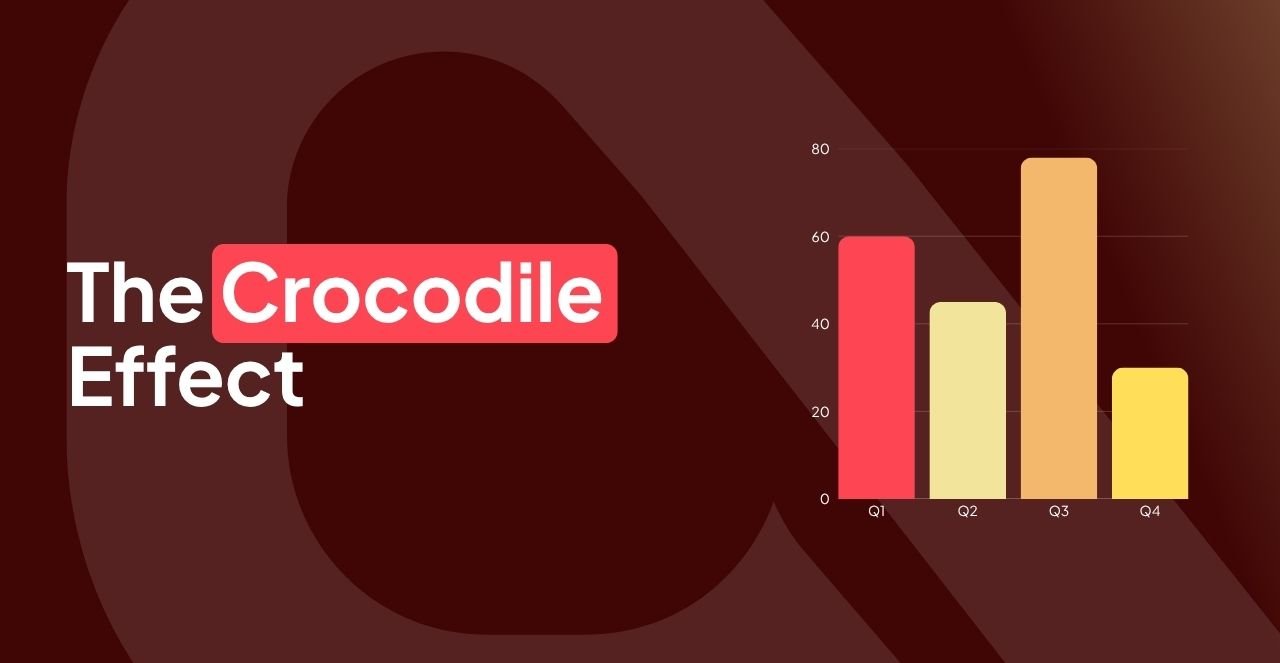
You open Google Search Console expecting good news. Impressions are climbing, rankings look stable, yet clicks are heading the other way. On the chart, the two lines spread apart until they resemble an open crocodile mouth.
That pattern is often called the crocodile effect in SEO, or more broadly, the Great Decoupling. It has become more visible as Google answers more queries directly through AI Overviews and other search features. Your website can still appear in search, but the searcher may get enough information without visiting it.
So, if you are asking, “Why is my organic traffic falling when my visibility looks better?”, the answer may be less about lost rankings and more about changing search behaviour.
What Is the Difference Between Impressions and Clicks in Google Search Console?
In Google Search Console, an impression is recorded when a link to your website is shown in Google results under Google’s measurement rules. A click is recorded when someone clicks through from Google to your site. CTR, or click-through rate, is clicks divided by impressions.
For example:
- 20,000 impressions and 1,000 clicks equals a 5% CTR.
- 30,000 impressions and 900 clicks equals a 3% CTR.
Visibility has increased, but traffic has fallen. This is why Google Search Console impressions vs clicks should be analysed together rather than in isolation.
Why Do I Have a Lot of Impressions but No Clicks?
There are several possible causes.
Google is answering the query before the click
For informational searches, Google may show an AI Overview, featured snippet, map pack or another SERP feature that satisfies the user immediately.
This is one reason the SEO industry started using terms such as the Great Decoupling SEO and the crocodile effect. Ahrefs documented this pattern in 2025, noting that rising impressions and falling clicks became more visible alongside the expansion of AI Overviews.
If you want to understand which searches are most exposed, see our guide to the keyword types most affected by AI Overviews.
Your result is visible but not winning the click
A page can rank well and still lose clicks if competitors have clearer titles, stronger relevance, fresher content or better-known brands.
If impressions are up but clicks are down, compare CTR by query and page. A declining CTR with stable positions usually points to a search results or messaging problem rather than a pure ranking problem.
You are appearing for broader searches
More impressions can mean Google is testing your page across a wider set of queries. That can increase visibility without generating proportionate clicks.
This is not always negative. The important question is whether those new impressions come from searches that matter to your business.
Why Are My Impressions Dropping?
Falling impressions are a different issue from the crocodile effect.
Common causes include:
- ranking losses
- lower search demand or seasonality
- indexing or crawl issues
- changes in search intent
- keyword cannibalisation
- outdated content
- technical SEO problems
Start by comparing Search Console periods and identifying which queries, pages, devices and countries lost visibility.
If the decline is site-wide, investigate technical and algorithmic causes. If it affects only a few pages, the issue is more likely content relevance, competition or intent.
It is also worth checking for common SEO mistakes that hurt rankings before assuming AI search is responsible.
Are Clicks or Impressions More Important?
Neither metric should be judged alone.
Impressions show visibility. Clicks show visits. Conversions show business value.
In 2026, a practical SEO scorecard should include:
- impressions
- clicks
- organic CTR
- qualified organic sessions
- leads or sales
- assisted conversions
- branded search growth
- AI search visibility where measurable
For a commercial landing page, clicks and conversions usually matter more than raw impressions. For upper-funnel content, impressions can still support brand recognition and later searches.
Why Am I Getting Clicks but No Sales?
If clicks are healthy but sales are not, the problem may sit further down the funnel.
Check four areas:
Search intent: Are visitors ready to enquire or buy, or are they only researching?
Landing page fit: Does the page answer the exact need behind the search?
Conversion experience: Is the offer clear? Is the page fast, mobile-friendly and easy to act on?
Tracking: Are conversions correctly set up in GA4 and your CRM?
A high-traffic blog post may generate few direct sales, while a lower-volume service page can produce stronger enquiries. Traffic alone is not a reliable measure of SEO performance.
Is SEO Still Worth It in 2026?
Yes, but successful SEO now goes beyond ranking a page and collecting the click.
SEO is increasingly about making your business understandable, credible and visible across the places where search engines and AI systems build answers.
That means creating content with direct answers, clear entities, useful examples, strong internal linking, credible expertise and genuine search-intent alignment.
Topic selection matters too. Some simple informational queries now have lower click potential because Google can answer them directly. Commercial, local, comparison, and decision-stage searches can still create valuable opportunities.
For a deeper look at the shift, read how Google AI Overviews are changing SEO strategy.
The Bottom Line
When impressions are up, but clicks are down, do not assume your SEO has failed. Diagnose whether the cause is AI-driven zero-click behaviour, weaker SERP appeal, broader query exposure or a genuine ranking problem.
The goal in 2026 is not simply more traffic. It is more valuable visibility and more qualified demand.
If your Search Console data is showing the crocodile effect and you need to understand what is driving it, explore Adcept Marketing’s SEO services in Australia for a strategy focused on rankings, AI-era visibility and measurable business outcomes.
FAQs
What is the crocodile effect in SEO?
It describes a Search Console pattern where impressions rise while clicks fall, creating two diverging lines that resemble an open crocodile mouth. It is closely linked to the Great Decoupling.
Can AI Overviews reduce my organic CTR?
Yes. If an AI Overview answers the query directly, some users may not need to visit a source website. The effect varies by query and search intent.
Should I remove content that gets impressions but few clicks?
Not automatically. Check whether it supports brand visibility, internal links, conversions elsewhere or topical authority. Improve or consolidate it if the traffic opportunity is weak and the page has little business value.
How can I improve CTR without changing rankings?
Test clearer titles, stronger intent matching, more specific benefits, fresher angles and better meta descriptions. Also review whether the search results page itself has changed.
What should I track besides organic traffic?
Track qualified leads, sales, assisted conversions, branded search, page-level CTR and visibility for commercially important queries.