Skip to content



Learn how to read Google Search Console’s generative AI performance report, track AI Overviews visibility and measure AI traffic in GA4.
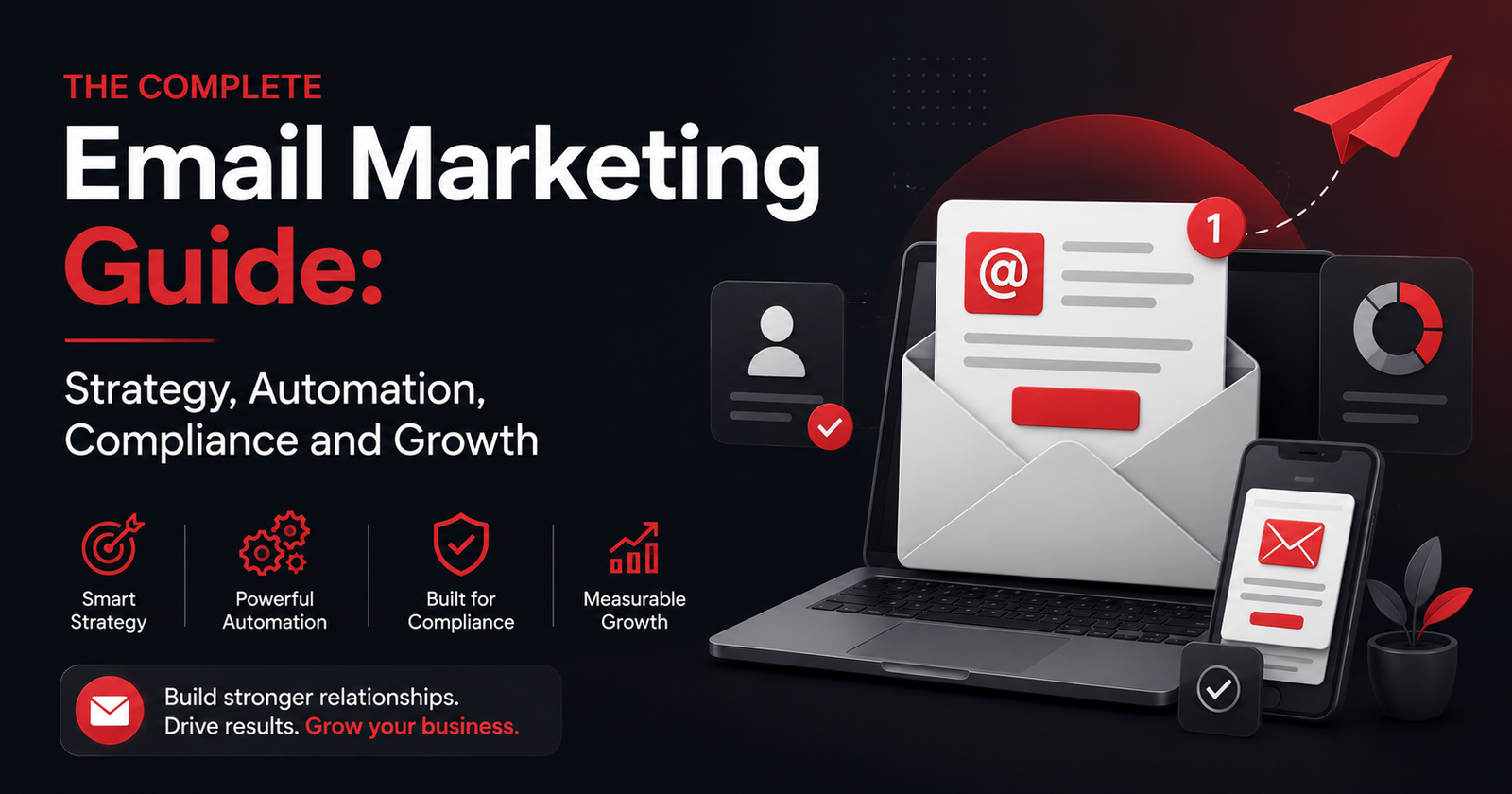
This email marketing guide explains how to build a practical email strategy that supports sales, customer retention and long-term growth. Email marketing is the process of using permission-based email communication to educate, nurture, convert and retain customers.
For Australian businesses, effective email marketing is not just about sending newsletters.
It involves list quality, segmentation, automation, deliverability, compliance, testing and clear reporting.
This guide is designed as a pillar article for Adcept’s wider email and automation content cluster. For campaign writing support, see our guide on how to write email campaigns. For software selection, read our comparison of the best marketing automation platforms.
What Is Email Marketing?
Email marketing is a direct digital marketing channel where a business sends permission-based emails to contacts, leads and customers.
These emails may include newsletters, offers, onboarding messages, education, product updates, event invitations, reminders and reactivation campaigns.
A good email programme helps move people through the customer journey without relying on manual follow-up.
What Is an Email Marketing Guide?
An email marketing guide is a practical framework for planning, sending and improving email campaigns. It covers strategy, list growth, segmentation, automation, compliance, deliverability, reporting and platform selection.
This matters because email works best when it is planned as a system.
One good campaign can help.
A well-built email system compounds over time.
Why Email Marketing Still Matters
Email marketing still matters because it gives businesses a direct way to communicate with people who have shown interest.
Unlike paid ads, email does not require paying for every impression or click.
Unlike social media, you are not fully dependent on platform algorithms.
Email works well for:
- Lead nurturing
- Customer onboarding
- Product education
- Repeat purchases
- Appointment reminders
- Event promotion
- Re-engagement
- Customer retention
- Sales follow-up
For service businesses, email can support trust before a sales conversation.
For ecommerce brands, it can support abandoned cart recovery, post-purchase care and repeat orders.
For B2B teams, it can keep leads warm until they are ready to speak.
Email Marketing Core Strategy
A strong email strategy starts with the business goal, not the email design.
Before choosing templates or software, define what the email programme needs to achieve.
Common goals include:
- Generate more qualified leads
- Convert enquiries into sales calls
- Increase repeat purchases
- Educate prospects before a meeting
- Reduce manual follow-up
- Reactivate old customers
- Improve customer retention
- Support a launch or event
How to Create an Email Marketing Strategy
To create an email marketing strategy, define your audience, offer, customer journey, content themes, sending frequency, automation flows and success metrics. Then build campaigns around clear stages such as awareness, consideration, conversion, onboarding and retention.
A simple strategy can follow this structure:
- Audience Who are you emailing?
- Goal What action should they take?
- Message What do they need to understand first?
- Offer What value are you giving them?
- Timing When should they receive it?
- Measurement How will you know it worked?
This structure keeps campaigns focused.
It also prevents random newsletters with no clear purpose.
How to Build an Email List
Email list building means collecting permission-based contacts through clear, useful and compliant methods.
A strong list is not the biggest list.
It is the most relevant list.
Good list-building methods include:
- Website forms
- Lead magnets
- Quote request forms
- Event registrations
- Webinar sign-ups
- Checkout opt-ins
- Newsletter subscriptions
- Free consultations
- Downloadable guides
- Customer onboarding forms
Avoid buying email lists.
They usually create poor engagement, spam complaints and compliance risk.
Best Lead Magnet Ideas
Useful lead magnets depend on your business model.
Examples include:
The best lead magnets solve a real problem before asking for a sale.
Segmentation and Personalisation
Segmentation means dividing your list into smaller groups based on shared traits, behaviour or intent.
Personalisation means using that context to make emails more relevant.
Good segmentation can be based on:
- Lead source
- Location
- Industry
- Purchase history
- Service interest
- Lifecycle stage
- Email engagement
- Website behaviour
- Customer type
- Deal stage
Why Segmentation Matters
Segmentation matters because not every contact needs the same message. A new lead, past customer, abandoned cart user and active sales opportunity should receive different emails based on their needs and stage.
For example, a new lead may need education.
A warm sales opportunity may need case studies.
A past customer may need a reactivation offer.
A current customer may need onboarding or support.
Segmentation makes email more useful and less annoying.
Email Automation and Lead Nurturing
Email automation sends messages based on rules, triggers or customer behaviour.
Lead nurturing is the process of building trust with prospects until they are ready to take action.
Mailchimp describes automation flows as workflows that can automatically send targeted emails, send SMS messages, add tags and complete other contact-related tasks when a person reaches a step in the flow.
Common automation flows include:
- Welcome sequence
- Lead nurture sequence
- Abandoned cart sequence
- Event reminder sequence
- Post-purchase sequence
- Review request sequence
- Re-engagement sequence
- Sales follow-up sequence
- Onboarding sequence
For businesses that need strategy, copy, CRM setup and automation support, Adcept’s Email Marketing Services can help turn email into a managed growth channel.
Email Marketing Guide for Automation
This email marketing guide recommends starting with three core automations: a welcome sequence, a nurture sequence and a re-engagement sequence. These usually create more value than sending one-off newsletters without a clear customer journey.
A simple lead nurture flow may look like this:
This is where email, CRM and automation work together.
For teams building wider customer journeys, Marketing Automation can connect forms, CRM fields, email sequences and reporting.
Australian Spam Act Compliance
Australian email marketing must follow spam and privacy rules.
The ACMA says commercial electronic messages must have consent, identify the sender and include a working unsubscribe option. Unsubscribe requests must be honoured within 5 working days.
This applies to email and SMS marketing.
What Does the Australian Spam Act Require?
The Australian Spam Act requires commercial electronic messages to be sent with consent, clearly identify the sender and include a functional unsubscribe option. Businesses must also be able to show evidence of consent if required.
Before sending campaigns, check:
- Did the person consent?
- Is the sender clearly identified?
- Is there a working unsubscribe link?
- Are unsubscribes processed quickly?
- Are suppression lists protected?
- Is consent recorded in the CRM?
- Are imported lists verified?
Privacy also matters.
The OAIC explains that Australian Privacy Principle 7 applies to direct marketing that uses or discloses personal information.
For email marketing, this means businesses should be careful with how they collect, store, segment and use customer data.
Deliverability Best Practices
Deliverability is the ability of your emails to reach the inbox rather than spam folders.
Good deliverability depends on sender reputation, authentication, list quality, engagement and content quality.
How to Improve Email Deliverability
To improve email deliverability, use permission-based lists, authenticate your domain, remove inactive contacts, avoid misleading subject lines, write useful content and monitor spam complaints.
Key deliverability actions include:
- Set up SPF, DKIM and DMARC
- Use a verified sending domain
- Avoid purchased lists
- Remove bounced addresses
- Clean inactive contacts
- Make unsubscribe easy
- Avoid spam-like subject lines
- Send consistent, relevant content
- Monitor complaint rates
- Segment instead of blasting everyone
A smaller engaged list is better than a large uninterested list.
Inbox providers watch how people respond to your emails.
If people ignore, delete or report your emails, deliverability can suffer.
Email Campaign Metrics
Email metrics show whether your campaigns are working.
They should connect to business goals, not just surface-level engagement.
Important email metrics include:
Which Email Metrics Matter Most?
The most important email metrics are the ones linked to business outcomes. Open rates are useful, but clicks, conversions, sales calls, bookings, revenue, replies and retention usually matter more.
For a service business, a good metric may be booked consultations.
For ecommerce, it may be revenue per recipient.
For B2B, it may be sales-qualified leads.
For retention, it may be repeat purchase or reactivation rate.
Email Marketing Platform Comparison
Choosing an email platform depends on your business type, automation needs, CRM setup and budget.
Mailchimp supports marketing automation flows and is often suitable for small businesses and simple journeys. HubSpot offers email marketing with CRM-driven automation and workflows, which can suit sales-led teams.
Klaviyo is often strong for ecommerce and B2C brands because it connects customer data with email, SMS, mobile and web-based touchpoints.
Brevo offers email, SMS, chat and CRM features, which can suit small to mid-sized businesses wanting multi-channel marketing in one platform.
Salesforce Marketing Cloud Account Engagement is positioned as a B2B marketing automation platform inside Salesforce Marketing Cloud.
For a deeper software comparison, read Adcept’s guide to the best marketing automation platforms.
Benefits of Email Marketing
Email marketing gives businesses a direct, measurable and cost-effective way to stay connected with prospects and customers.
Key benefits include:
- Better lead follow-up
- Stronger customer relationships
- Higher repeat purchase potential
- More consistent sales communication
- Lower manual admin
- Better audience segmentation
- Clearer campaign reporting
- Support for long sales cycles
Challenges of Email Marketing
Email marketing can fail when it is poorly planned.
Common challenges include:
- Low-quality lists
- Weak subject lines
- Poor deliverability
- No segmentation
- Too many emails
- Weak calls to action
- No automation plan
- No compliance process
- Poor CRM data
These issues are fixable.
They usually come from weak strategy, not email itself.
Real Business Example
A consulting business receives leads from Google Ads, LinkedIn and referral partners.
Before email automation, the team sends follow-up emails manually.
Some leads receive fast replies.
Others are forgotten.
A better setup would include:
- Website form connected to CRM
- Lead source captured automatically
- Welcome email sent immediately
- Service-specific nurture sequence triggered
- Sales task created for engaged leads
- Case study email sent after two days
- Reminder sent if no reply
- Dashboard tracks leads, clicks and calls booked
This creates a more consistent process.
It also gives the sales team better context before they speak to the lead.
For businesses focused on Lead Nurturing, this type of workflow can turn cold interest into warmer conversations.
Common Mistakes
Mistake 1: Sending Without a Strategy
Random emails rarely perform well.
Every campaign should have a clear audience, message and next step.
Mistake 2: Buying Email Lists
Bought lists often damage trust and deliverability.
They may also create compliance risk.
Mistake 3: Treating Everyone the Same
A new subscriber should not receive the same message as a loyal customer.
Use segmentation.
Mistake 4: Ignoring Unsubscribes
Unsubscribe management is not optional.
It is a legal and trust issue.
Mistake 5: Measuring Only Opens
Open rates are useful, but they do not tell the whole story.
Track clicks, replies, conversions and revenue.
Best Practices From This Email Marketing Guide
This email marketing guide recommends building email around permission, relevance, consistency and measurement. The best results usually come from clean lists, strong segmentation, useful content, well-timed automation and clear reporting.
Use these best practices:
- Collect consent clearly
- Keep lists clean
- Segment by behaviour and stage
- Write simple subject lines
- Use one main call to action
- Automate key follow-ups
- Test subject lines and offers
- Monitor deliverability
- Review metrics monthly
- Keep compliance records
Expert Tip
Write every email for one person, one problem and one action.
This keeps the message focused and easier to act on.
Future Trends
Email marketing is becoming more connected with automation, CRM and AI.
Future trends include:
- AI-assisted campaign planning
- Behaviour-based segmentation
- Predictive send times
- Dynamic product recommendations
- CRM-triggered email workflows
- Automated reporting summaries
- Stronger privacy controls
- More human approval for AI-written campaigns
- Better integration with sales pipelines
The future of email is not more volume.
It is better timing, cleaner data and more relevant communication.
Quick Summary
This guide covers the full email marketing system: strategy, list building, segmentation, automation, compliance, deliverability, metrics and platform selection.
Start with a clear goal.
Build a permission-based list.
Segment contacts.
Automate key journeys.
Measure outcomes that matter.
Conclusion
This email marketing guide shows that strong email marketing is not about sending more campaigns.
It is about sending better messages to the right people at the right time.
For Australian businesses, that means building a clear strategy, collecting consent properly, respecting unsubscribe rules, keeping data clean and using automation carefully.
The strongest email programmes connect with CRM, sales, customer service and reporting.
They support the full customer journey, from first enquiry to repeat purchase.
If your business needs help building a practical email system, Adcept’s Email Marketing Services can support strategy, copywriting, automation, list management and performance improvement.
Key Takeaways
- Email marketing works best when it is planned as a system.
- A strong list is permission-based, relevant and well maintained.
- Segmentation improves relevance and reduces email fatigue.
- Automation supports welcome flows, nurture sequences and re-engagement.
- Australian businesses must follow Spam Act and privacy requirements.
- Deliverability depends on trust, authentication and engagement.
- Metrics should connect to leads, sales, bookings, revenue or retention.
- The right platform depends on your business model and CRM needs.
FAQs
What is email marketing?
Email marketing is the use of permission-based emails to communicate with leads, customers and subscribers. It can support education, sales, onboarding, retention and repeat purchases.
What should an email marketing guide include?
A complete email marketing guide should cover strategy, list building, segmentation, automation, compliance, deliverability, campaign metrics and platform selection.
How often should a business send marketing emails?
It depends on the audience and content value. Many businesses send weekly, fortnightly or monthly emails. The key is consistency, relevance and monitoring unsubscribes or low engagement.
What is the best email marketing platform?
The best platform depends on your needs. Mailchimp is simple, HubSpot suits CRM-led teams, Klaviyo suits ecommerce, ActiveCampaign suits automation-heavy campaigns and Salesforce suits larger B2B teams.
Is email marketing legal in Australia?
Yes, but businesses must follow spam and privacy rules. Commercial emails generally need consent, sender identification and a working unsubscribe option.
What is email segmentation?
Email segmentation means dividing your list into groups based on traits or behaviour. Examples include customer type, location, purchase history, lead source, engagement or lifecycle stage.
What is email deliverability?
Email deliverability is the ability of your emails to reach inboxes instead of spam folders. It depends on sender reputation, authentication, list quality, engagement and content quality.
How does email marketing support lead nurturing?
Email marketing supports lead nurturing by sending helpful, timed messages that educate prospects, answer objections, build trust and guide them towards a sales conversation or purchase.