Skip to content


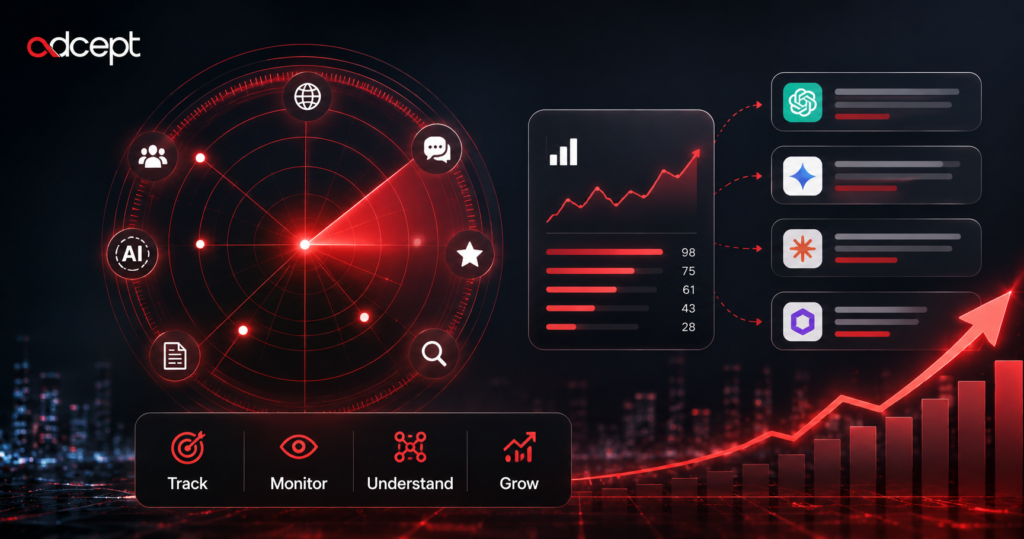
Learn what Brand Radar is, how Ahrefs tracks AI visibility, and how brands can use AI citation tracking to grow reach.
Search engine optimisation has changed dramatically over the last decade. For years, businesses focused on ranking individual pages for specific keywords. The strategy was simple: pick a keyword, write an article targeting that phrase, add it repeatedly throughout the page, and hope Google would rank it.
That approach no longer works the way it once did.
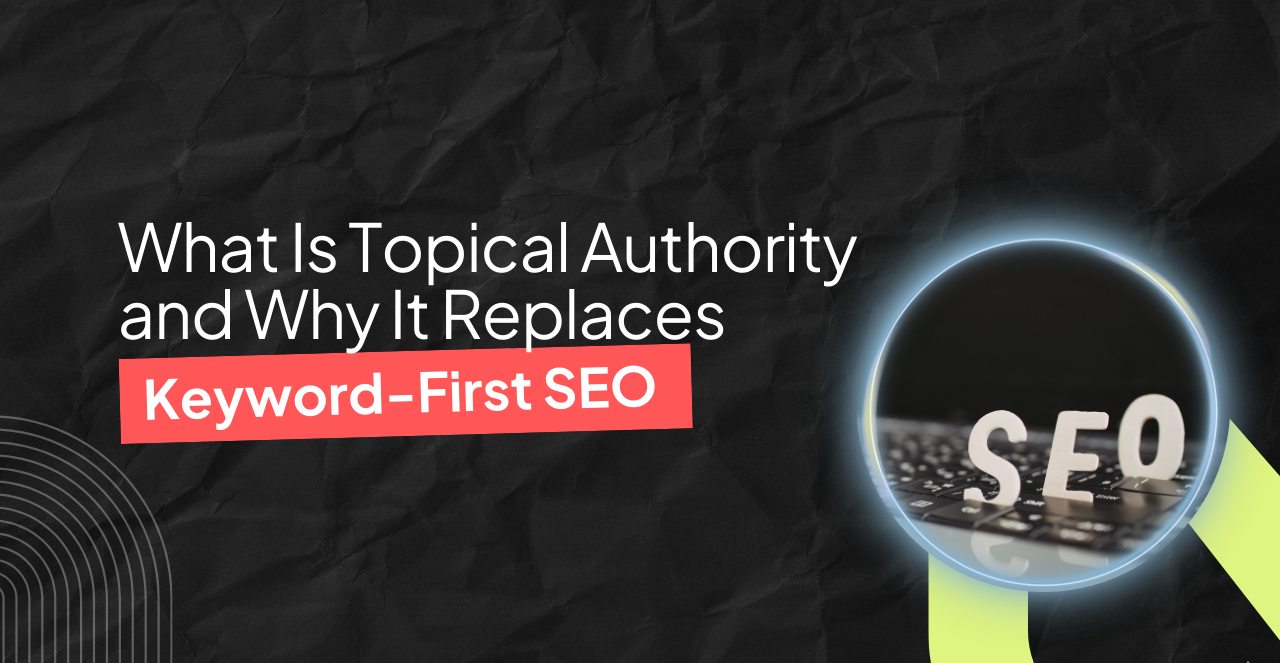
Google has evolved into a semantic search engine that evaluates expertise across entire topics rather than isolated pages. This shift is why topical authority has become the foundation of modern SEO.
Topical authority refers to the depth and breadth of content a website produces around a particular subject. Instead of writing one page about a keyword, businesses now build interconnected content ecosystems that cover every meaningful subtopic related to a theme.
For example, a digital marketing agency might publish articles covering SEO strategy, technical SEO, internal linking, semantic search, conversion optimisation, content marketing, and analytics. Each page connects to the others through structured internal links, forming a clear topic hierarchy.
This approach helps search engines understand that the website is not simply targeting a keyword. It demonstrates genuine subject expertise.
For Australian businesses competing in crowded markets, topical authority is quickly replacing keyword-first SEO. Agencies that continue producing keyword-stuffed articles often struggle to compete against websites that demonstrate real topical depth.
The result is a new SEO landscape where knowledge coverage matters more than keyword density.
The Evolution from Keyword First SEO to Topic-Based Search
Traditional SEO revolved around keywords. Marketers researched search terms, selected a target phrase, and wrote pages designed to match that query as closely as possible.
The process often looked like this:
- Find a keyword with good search volume
- Write a blog post targeting that phrase
- Repeat the keyword multiple times
- Acquire backlinks to the page
While this method worked for many years, it created a web filled with repetitive and shallow content.
Search engines eventually needed a better way to evaluate quality.
Google’s algorithm updates over the last decade have shifted the focus toward understanding topics, relationships between concepts, and user intent. Advances in natural language processing, including technologies such as BERT and other semantic models, help Google interpret meaning rather than simply matching words.
As a result, Google now evaluates:
- How well a site covers a topic overall
- Whether related subtopics exist within the site
- The relationships between pieces of content
- The internal linking structure that connects them
In other words, Google ranks topic ecosystems rather than individual pages.
This change explains why many keyword-focused blogs struggle to rank today. A single article about SEO tips cannot compete with a site that publishes a full network of interrelated SEO resources.
Businesses that want sustainable organic traffic must think beyond keywords. They must build topical coverage.
This is why agencies such as Adcept prioritise semantic frameworks before publishing any content. Mapping the full topic universe ensures every article strengthens the authority of the entire content ecosystem.
Businesses exploring structured SEO strategies can learn more through our SEO services, which focus on semantic content architecture rather than outdated keyword targeting.
Understanding Topical Authority and Semantic Content Networks

Topical authority is achieved when a website demonstrates comprehensive expertise across a specific subject area. Instead of publishing disconnected blog posts, the site develops a structured knowledge base that covers all relevant subtopics.
Search engines interpret this coverage as expertise.
A helpful way to visualise this concept is through a semantic content network. A semantic content network is a system of interconnected pages that explores every aspect of a topic. Each article focuses on a specific subtopic, while internal links connect related pages.
For example, a business covering digital marketing might create content clusters around:
- Search engine optimisation
- Paid advertising strategies
- content strategy development
- marketing analytics and reporting
- automation and AI tools
Each cluster contains multiple supporting articles, guides, and case studies.
These pages link to one another in ways that reflect logical topic relationships. This internal linking signals topical hierarchy to search engines.
Research into semantic SEO frameworks explains that search engines analyse entities, attributes, and contextual relationships to understand information structures on the web. By connecting related concepts and topics through structured content, websites help search engines interpret meaning and context more accurately.
This is why content structure matters as much as the content itself. Businesses that organise their information into topical networks build stronger authority signals than those publishing isolated articles.
Why Topical Authority Outperforms Keyword-Stuffed Content

Many agencies still rely on keyword density strategies that belong to an earlier era of SEO. These strategies often produce repetitive, low-value content that struggles to compete in modern search results.
Topical authority outperforms keyword-first SEO for several reasons.
Search engines evaluate expertise across entire sites
When a website covers dozens of related subtopics within a niche, it demonstrates deeper expertise. Search engines are more likely to trust these sites because they provide comprehensive information.
Internal linking strengthens topical signals
Internal linking helps search engines understand how pages relate to one another. A well-structured internal link network reinforces topical hierarchy and allows authority to flow throughout the content ecosystem.
Businesses investing in web design and development often improve SEO performance by implementing structured internal linking that reflects topical relationships.
AI search systems prioritise authoritative sources
AI-powered search features, such as Google’s AI overviews, rely heavily on trusted sources that demonstrate subject depth. Websites with strong topical authority are more likely to be referenced in these summaries.
Keyword stuffing reduces content quality
Keyword-stuffed content often reads unnaturally and fails to provide genuine value. Search engines now prioritise content that answers questions thoroughly and naturally.
The result is a major shift in SEO strategy. The focus is no longer on how many times a keyword appears. The focus is on how well a website covers a subject.
Building Topical Authority with a Structured Content Strategy

Achieving topical authority requires planning. Publishing random articles rarely produces the depth required to signal expertise.
A structured content strategy begins with mapping the entire subject ecosystem.
The process typically involves several steps.
Topic universe mapping
The first step is identifying the full set of subtopics that belong to a subject area. For example, an SEO topic cluster may include:
- technical SEO
- on-page optimisation
- content strategy
- link building
- search intent analysis
- semantic search
Each subtopic becomes a supporting article or guide within the cluster.
Content hierarchy development
Once topics are mapped, they are organised into a hierarchy. Core pillar pages sit at the centre of the cluster, while supporting pages explore specific subtopics.
Internal links connect these pages according to their topical relationships.
Consistent publishing cadence
Topical authority builds over time through consistent publishing. Search engines observe the expansion of topic coverage and begin associating the website with expertise in that field.
Businesses implementing marketing automation strategies often combine publishing workflows with automation tools. Integrating content with CRM systems through CRM integration services can help track lead generation from organic traffic.
Measurement and optimisation
Topical coverage should be monitored through analytics and search performance data. Tools that analyse keyword clusters and search queries help identify content gaps within a topic ecosystem.
Businesses using analytics and reporting services can track which clusters are generating traffic and where additional coverage is needed.
Over time, this structured approach builds a powerful knowledge network that search engines recognise as authoritative.
How Topical Authority Supports Long-Term SEO Growth
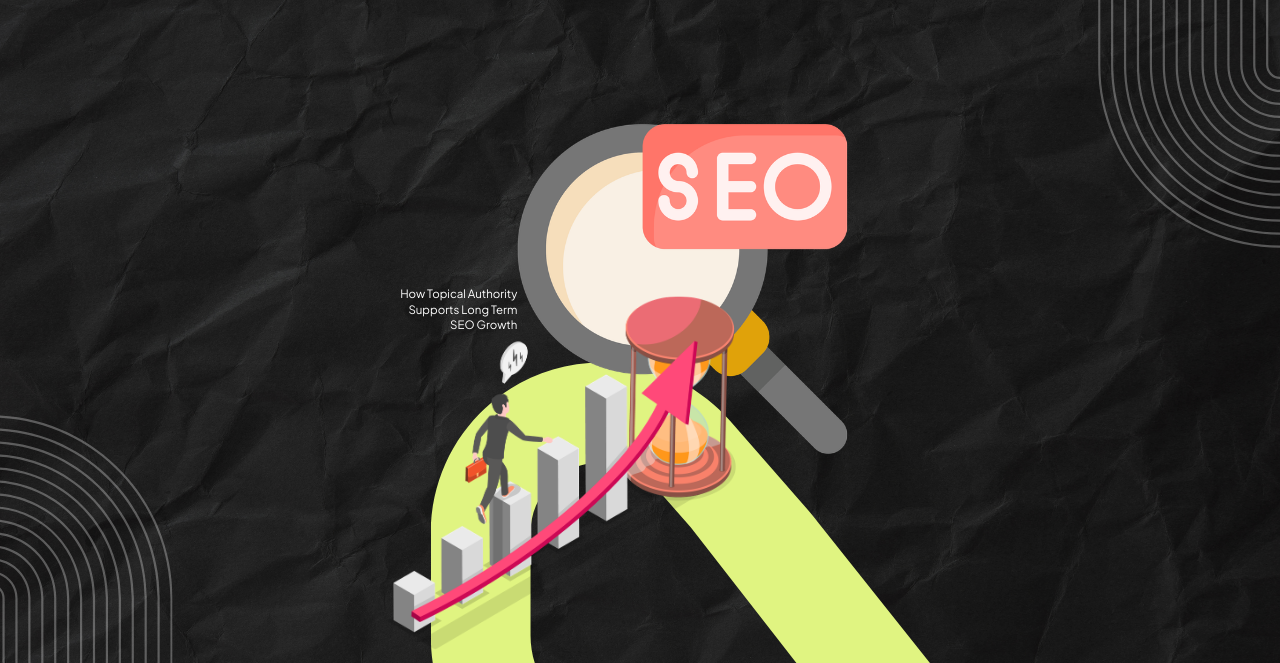
One of the most important advantages of topical authority is sustainability. Keyword-driven SEO often produces short-term gains, but those rankings are fragile. Competitors can easily replicate keyword targeting.
Topical authority is harder to replicate because it reflects deep knowledge coverage.
Websites with strong topic ecosystems benefit in several ways.
You can also read this insightful article on Ahrefs for a broader view: What Is Topical Authority in SEO & How to Build It
Higher trust from search engines
Search engines trust sources that demonstrate expertise across multiple related subjects. This trust often leads to faster indexing and stronger rankings for new content.
Improved internal ranking power
When one article gains traction, the authority flows through internal links to other pages in the cluster. This lifts the performance of the entire topic ecosystem.
Greater visibility in AI-driven search results
AI search systems extract information from trusted knowledge sources. Websites with strong topical coverage are more likely to appear in AI-generated summaries.
Reduced reliance on backlinks
Backlinks still matter, but topical coverage often compensates for smaller link profiles. Many Australian websites rank competitively with relatively few referring domains because their topical structure is strong.
Businesses exploring modern SEO strategies often integrate content marketing with automation tools. For example, AI automation systems can support research workflows, topic mapping, and content distribution.
The key advantage remains the same: topical coverage compounds over time.
Conclusion
Topical authority is now the foundation of modern SEO.
Instead of chasing individual keywords, successful businesses build interconnected content ecosystems that demonstrate genuine expertise. These semantic networks help search engines understand topic relationships and trust the source providing the information.
Keyword-first SEO still exists, but it is rapidly losing effectiveness. Google now ranks topics, not isolated pages.
Businesses that invest in comprehensive topical coverage gain a powerful advantage. Their content becomes more visible, their authority grows over time, and their organic traffic becomes more resilient.
Adcept approaches SEO differently from many traditional agencies. Rather than publishing keyword-stuffed articles, we map the entire topical universe before writing a single word. This ensures every piece of content strengthens the authority of the whole ecosystem.
Businesses that adopt this strategy today position themselves to dominate their niche for years to come.
Key Takeaways
- Google ranks topic ecosystems rather than individual pages.
- Topical authority is built by covering every meaningful subtopic within a subject.
- Internal linking that reflects topical hierarchy strengthens authority signals.
- Content gaps weaken the performance of entire clusters.
- AI search features prioritise sources that demonstrate deep topical coverage.
- Mapping the full topical universe before publishing content creates long-term SEO advantages.
Frequently Asked Questions
What is topical authority in SEO?
Topical authority is a measure of how comprehensively and accurately a website covers all subtopics within a subject area. Search engines reward sites that demonstrate genuine subject matter expertise through interconnected, semantically rich content networks.
How long does it take to build topical authority?
For most competitive Australian markets, meaningful topical authority signals emerge within 90 to 180 days of consistent publishing. Internal linking density between topic cluster pages often accelerates the process.
Is topical authority more important than backlinks?
Both factors matter, but strong topical coverage frequently outperforms large backlink profiles in local and mid competition markets. Many Australian businesses rank in the top three positions with fewer than 50 referring domains by deploying semantic content networks.
How many articles are needed to build topical authority?
There is no fixed number. The goal is to cover every meaningful subtopic within a subject area. Some niches require 20 articles, while competitive industries may require 100 or more interconnected pages.
Can small businesses build topical authority?
Yes. Small businesses often succeed with topical authority strategies because they can focus deeply on a specific niche. Consistent publishing and strategic internal linking can outperform larger competitors with scattered content.