Skip to content



Learn how to read Google Search Console’s generative AI performance report, track AI Overviews visibility and measure AI traffic in GA4.
Search engine optimisation is often associated with content, keywords, and backlinks. However, the technical foundation of a website determines whether search engines can crawl, understand, and rank that content effectively.
A technical SEO audit identifies structural issues that affect how search engines access and interpret your website. For Australian businesses operating in competitive industries such as legal services, property, finance, and e-commerce, technical health is not optional. It directly affects how quickly Google crawls new pages, indexes updates, and evaluates site authority.
Many SEO agencies publish basic technical checklists, but they often overlook newer ranking factors such as Core Web Vitals performance, crawl efficiency, and optimisation for AI-driven search systems.
In 2026, technical SEO is evolving beyond simple site health checks. Modern audits examine how efficiently search engines process a website’s architecture, performance signals, and structured data.
This guide outlines the complete technical SEO audit checklist that Australian businesses should follow to ensure their websites remain competitive.
Why Technical SEO Matters More in Competitive Australian Markets
The Australian digital landscape is increasingly competitive. Industries such as law, real estate, medical services, finance, and e-commerce are saturated with well-optimised websites competing for the same search visibility.
When multiple businesses produce high-quality content, technical SEO becomes the deciding factor that determines which website ranks first.
Technical optimisation affects several critical processes within search engines.
First, it determines crawl efficiency. Search engines allocate a limited crawl budget to each website. If the site architecture is inefficient or contains duplicate URLs, search engines may waste resources crawling unnecessary pages instead of discovering new content.
Second, it influences indexation speed. Websites with a strong technical structure allow search engines to process new pages faster. This is particularly important for businesses publishing regular content or updating product listings.
Third, it impacts user experience signals. Google’s Page Experience metrics evaluate loading performance, visual stability, and responsiveness. Poor technical performance can suppress rankings even when content quality is strong.
Australian businesses investing in professional SEO services often discover that technical issues are limiting their growth. Fixing these issues allows existing content to perform significantly better without publishing additional articles.
Technical SEO, therefore, acts as the infrastructure of organic search visibility.
Core Web Vitals and Page Experience Signals
One of the most critical components of any technical SEO audit is evaluating Core Web Vitals. These metrics measure how quickly and smoothly a page loads for real users.
Google currently evaluates three primary Core Web Vitals metrics.
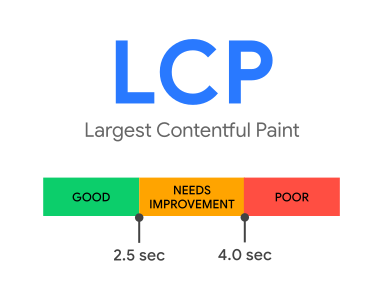
Largest Contentful Paint
Largest Contentful Paint measures how long it takes for the main content of a page to load. Google recommends an LCP of under 2.5 seconds.
Pages with slow loading times often suffer from large images, inefficient scripts, or unoptimised hosting environments.
Interaction to Next Paint
Interaction to Next Paint measures responsiveness when users interact with elements such as buttons or forms. Poor responsiveness indicates heavy JavaScript processing or inefficient code execution.
Cumulative Layout Shift
Image: https://web.dev/static/articles/cls/image/good-cls-values.svg
Cumulative Layout Shift measures visual stability. If elements move unexpectedly during loading, it creates a poor user experience.
Technical audits should analyse these metrics across both desktop and mobile environments.
For many Australian websites, server response time is the largest contributor to poor performance. Time to First Byte should ideally remain under 200 milliseconds. Slow server infrastructure frequently pushes this metric above 600 milliseconds, which negatively impacts page loading speed.
Businesses investing in professional web design and development services often improve these metrics through optimised hosting environments, image compression, and code refinement.
Fast websites improve both user experience and search rankings. You can check how your website is performing on mobile devices and desktops with the help of Google’s own free tool: PageSpeed Insights
Crawlability and Indexation Health
Search engines rely on crawling systems to discover and understand pages. If a website contains crawl barriers, search engines may fail to find important content.
A technical SEO audit should evaluate several crawl-related factors.
Robots.txt configuration
The robots.txt file controls which sections of a website search engines can crawl. Incorrect configuration may accidentally block important pages from being indexed.
XML sitemap accuracy
XML sitemaps help search engines discover URLs efficiently. An audit should confirm that sitemaps include only indexable pages and exclude redirects or duplicate URLs. You can create your sitemaps using XML Sitemaps Generator.
Indexation status
Many websites unknowingly block pages through noindex directives, canonical misconfiguration, or incorrect robots.txt rules. Reviewing index coverage reports helps identify these issues.
Orphan pages
Orphan pages are pages that exist on a website but have no internal links pointing to them. Because search engines rely heavily on internal linking for discovery, orphan pages are often invisible to Google.
Internal linking should reflect topical relationships between pages. Businesses implementing structured SEO strategies often use internal linking to strengthen topical signals across content clusters.
For organisations publishing extensive content, proper crawl management ensures that search engines allocate resources efficiently.
Duplicate Content and Canonical Tag Management
Duplicate content is one of the most common technical SEO problems discovered during audits. It occurs when multiple URLs display identical or nearly identical content.
Common causes include:
- URL parameters created by filters or tracking tags
- Pagination without canonical signals
- HTTP and HTTPS duplication
- www and non www variations
- CMS generated duplicate pages
When search engines encounter duplicate content, they must determine which version of a page should rank. Without clear canonical signals, ranking authority becomes diluted across multiple URLs.
Canonical tags tell search engines which version of a page represents the preferred source.
For example, e-commerce websites frequently generate parameter URLs when users filter products by category or price. Without canonical tags pointing to the main product category page, search engines may treat these parameter pages as separate entries.
During a technical audit, every indexable page should contain a correctly configured canonical tag pointing to the preferred version of the content.
Resolving duplicate content issues consolidates ranking signals and prevents search engines from splitting PageRank across multiple URLs.
Structured Data and Schema Markup Implementation
Schema markup helps search engines interpret the meaning of content on a website. It provides structured data that describes entities such as businesses, products, reviews, events, and articles.
Structured data improves how search engines understand a website’s context.
Common schema types used by Australian businesses include:
- Local Business schema
- Organisation schema
- Product schema
- FAQ schema
- Article schema
- Review schema
Schema markup allows search engines to connect a website with real-world entities. This process strengthens search visibility and can enable enhanced search features such as rich snippets.
For example, a dental clinic implementing voice agent technology may use schema markup to help search engines recognise appointment booking capabilities or service categories.
Businesses exploring AI automation tools often integrate structured data into automated publishing workflows. This ensures every new page includes schema markup that supports entity recognition.
As search engines increasingly rely on entity understanding, structured data becomes a critical technical SEO component.
Site Architecture and Internal Linking Structure
A well-structured site architecture helps search engines understand topical relationships between pages. It also ensures users can navigate content easily.
Technical SEO audits should evaluate several architectural factors.
Logical URL hierarchy
URLs should reflect the organisational structure of the website. Clear hierarchies make it easier for search engines to interpret topic relationships.
Internal link distribution
Internal links pass authority between pages. Important pages should receive more internal links than low-priority pages.
Content clusters
Content clusters group related pages around central pillar topics. This structure reinforces topical authority and strengthens semantic relevance.
Navigation clarity
Navigation menus should prioritise important content categories. Poor navigation can bury valuable pages several layers deep within the site.
Businesses implementing strategic content frameworks often combine internal linking with strong messaging. Services such as copywriting support this by ensuring internal links appear naturally within content rather than feeling forced.
Site architecture acts as the roadmap that guides both users and search engines through the website.
Crawl Budget Management for Large Websites
Crawl budget refers to the number of pages search engines are willing to crawl on a website within a given timeframe. Smaller websites rarely face crawl budget limitations, but once a site exceeds approximately 500 pages, efficiency becomes important.
Large ecommerce websites, property listing portals, and content-heavy sites often encounter crawl inefficiencies caused by:
- Duplicate URLs
- Faceted navigation parameters
- Infinite pagination
- Low-value indexable pages
When search engines spend time crawling unnecessary pages, important content may not be discovered quickly.
Technical audits should analyse server logs and crawl reports to identify inefficient crawling patterns.
Optimisation techniques include:
- Consolidating duplicate pages
- Blocking low-value parameters
- Implementing canonical signals
- Improving internal link structure
Businesses integrating marketing automation or CRM integration often generate new landing pages regularly. Crawl budget management ensures these pages are discovered and indexed quickly.
Efficient crawling improves the speed at which new content begins ranking.
Conclusion
A technical SEO audit is not a one-time exercise. It is an ongoing process that ensures search engines can efficiently crawl, index, and understand your website.
For Australian businesses competing in crowded digital markets, technical health directly influences ranking performance. Even the best content cannot succeed if search engines struggle to access or interpret it.
Modern technical audits now extend beyond basic site checks. They evaluate Core Web Vitals performance, crawl efficiency, structured data implementation, and AI-friendly architecture.
Adcept combines automated scanning with expert analysis to produce technical audit reports that translate into measurable ranking improvements. By identifying hidden structural issues and resolving them systematically, businesses unlock the full potential of their organic search visibility.
Websites that maintain strong technical foundations are easier for search engines to trust, crawl, and rank.
Key Takeaways
- Time to First Byte under 200 milliseconds and Largest Contentful Paint under 2.5 seconds are essential technical benchmarks.
- Orphan pages with no internal links remain invisible to search engines.
- Canonical tag misconfiguration can dilute ranking authority across duplicate URLs.
- Crawl budget becomes critical for websites exceeding 500 pages.
- Schema markup helps search engines understand the entities represented by your business.
Frequently Asked Questions
How often should I run a technical SEO audit?
A comprehensive technical SEO audit should be conducted quarterly. Automated weekly crawls can detect regressions between full audits. Any major website redesign, migration, or CMS upgrade should trigger an immediate audit.
What is the most common technical SEO issue on Australian websites?
The most common issues include duplicate content caused by parameter URLs, missing canonical tags, and slow server response times, where Time to First Byte exceeds 600 milliseconds.
Does Core Web Vitals affect rankings in Australia?
Yes. Since Google’s Page Experience update became a ranking signal, improvements in metrics such as Largest Contentful Paint have shown clear correlation with ranking gains in competitive Australian search results.
What tools are used in technical SEO audits?
Common tools include crawling software, server log analysis platforms, page speed testing tools, and structured data validators. These tools identify technical barriers that prevent search engines from understanding websites efficiently.
Is technical SEO important for small businesses?
Yes. Even small websites benefit from strong technical foundations. Efficient site architecture and fast-loading pages help search engines crawl content quickly and improve user experience for visitors.