

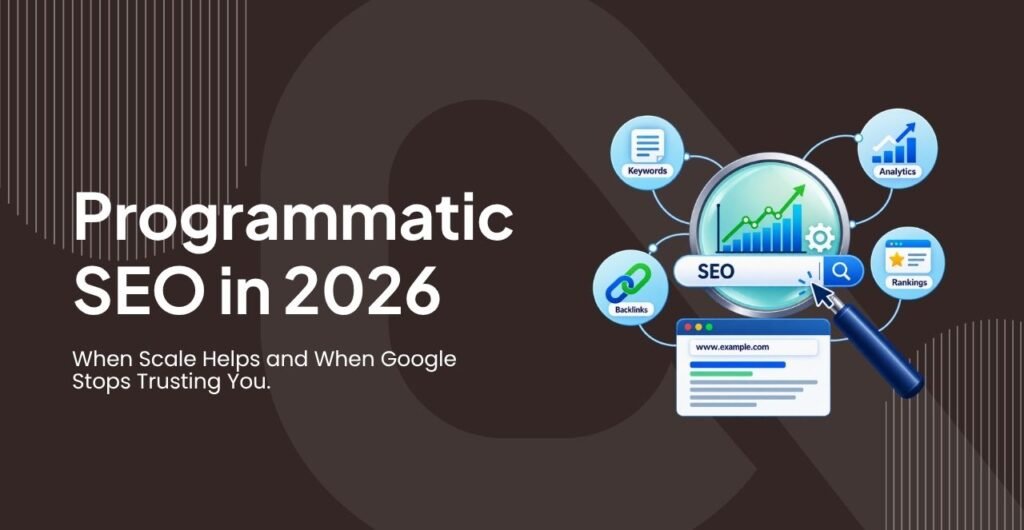
Learn how programmatic SEO works in 2026, where template pages add value, when scaled content becomes risky, and how to avoid Google’s spam policies.
Most Australian businesses spend weeks refining targeting, budgets, and bidding strategies, yet rush through the actual ad copy in minutes. That is a costly mistake. No matter how precise your targeting is, if your ad does not capture attention or spark interest, it simply will not perform.
Ad copywriting is the moment where everything comes together. It is where your targeting meets human behaviour. On platforms like Google and Meta, you are competing for attention in extremely crowded environments. Users are scrolling quickly, comparing options, and making split-second decisions.
The difference between a high-performing campaign and a wasted budget often comes down to a few words. A stronger headline, a clearer value proposition, or a more relevant message can significantly improve click-through rates and reduce cost per lead.
This guide breaks down how to write ad copy that stops the scroll, attracts the right audience, and drives meaningful action. It focuses on practical strategies that work in the Australian market, where authenticity and clarity consistently outperform hype and exaggeration.
Why Ad Copy Matters More Than Targeting

There is a common belief that targeting is the most important factor in paid advertising. While targeting is critical, it only determines who sees your ad. Copy determines whether they engage with it.
Even the most well-targeted campaign will fail if the message does not resonate. Users are not thinking about your targeting settings. They are reacting to what they see in front of them.
The Role of Copy in Performance
Ad copy influences several key metrics:
- Click-through rate: how many people click your ad
- Cost per click: influenced by engagement and relevance
- Conversion rate: how many clicks turn into leads or sales
Stronger copy improves all of these metrics simultaneously. This means better results without increasing spend.
The Hidden Cost of Weak Copy
Poorly written ads lead to lower engagement, higher costs, and wasted impressions. Over time, this compounds into significant inefficiencies in your campaigns.
Copy as a Competitive Advantage
Most businesses focus heavily on targeting and bidding, but overlook copy. This creates an opportunity. By investing in high-quality ad copy, you can outperform competitors even with similar budgets.
For businesses looking to improve campaign performance, combining strategy with expert ad copywriting services for Google and Meta can unlock measurable gains in both efficiency and results.
Understanding Platform Differences: Google vs Meta

Writing effective ad copy requires understanding how users behave on each platform. Google and Meta operate in very different contexts.
Google Ads, Intent-Driven Copy
Users on Google are actively searching for something. They have intent. Your job is to match that intent as closely as possible.
Effective Google ad copy focuses on:
- Relevance to the search query
- Clear value proposition
- Immediate solutions
For example, if someone searches “plumber Melbourne”, your ad should directly address that need with clarity and specificity.
Meta Ads, Attention-Driven Copy
On Meta platforms like Facebook and Instagram, users are not actively searching. They are scrolling. This means your copy needs to interrupt that behaviour.
Effective Meta ad copy focuses on:
- Strong hooks that capture attention
- Emotional or relatable messaging
- Visual and textual alignment
The key difference is intent versus interruption. Google rewards relevance, while Meta rewards engagement.
Understanding these differences allows you to tailor your copy to each platform rather than using a one-size-fits-all approach.
The Hook, Winning Attention in Seconds

The hook is the most important part of any ad. It determines whether someone stops scrolling or keeps moving.
On Meta, you have less than a second to capture attention. On Google, you have a slightly longer window, but the principle is the same. If your opening does not resonate, nothing else matters.
What Makes a Strong Hook
A good hook is:
- Specific rather than generic
- Relevant to the audience’s situation
- Focused on a clear outcome or problem
Examples of effective hooks include:
- “Struggling to generate leads from your website?”
- “Melbourne businesses, reduce your ad spend without losing leads”
Avoiding Common Mistakes
Many ads fail because they start with generic statements. Phrases like “we offer high-quality services” do not capture attention.
Another mistake is trying to be too clever. Clarity always outperforms creativity in ad copy.
Testing Different Hooks
Not every hook will work for every audience. This is why testing is essential. Create multiple variations and analyse performance data to identify what resonates.
Strong hooks increase engagement, improve click-through rates, and set the foundation for the rest of your ad.
Writing High-Converting Google Ad Copy
Google Ads require precision. Users are searching with a specific goal in mind, and your copy needs to align with that intent immediately.
Headline Strategy
Your headline should include the main keyword and clearly communicate value. Use all available characters to maximise visibility.
Description Lines
Descriptions should expand on the headline, highlighting benefits and differentiators. Focus on what makes your offer unique.
Use of Extensions
Ad extensions provide additional information and improve visibility. Use them to highlight key services, offers, and contact options.
Message Match
Your ad copy should align closely with your landing page. When users click through, they should see consistent messaging. This improves both conversion rates and Quality Score.
Example Structure
- Headline, clear and keyword-focused
- Supporting line, benefits and outcomes
- Call to action, direct and action-oriented
For businesses looking to refine this approach, working with a strategic partner like digital marketing experts in Australia can help ensure your campaigns are optimised end-to-end.
Writing Scroll-Stopping Meta Ad Copy
Meta ads operate in a completely different environment. Users are not searching; they are browsing. Your copy needs to interrupt that behaviour.
Opening Line Matters Most
The first line of your ad should grab attention immediately. This is where the hook comes into play.
Storytelling and Relatability
Meta users respond well to content that feels personal and relatable. Use scenarios, questions, or statements that reflect their experience.
Clear Value Proposition
Even though the format is more casual, the message still needs to be clear. What are you offering, and why should they care?
Visual and Copy Alignment
Your copy should complement your creative. If the visual highlights a problem, your text should reinforce it.
Call to Action
Guide users toward the next step. Whether it is clicking a link or submitting a form, make it clear and easy.
Meta ad copy works best when it feels natural and engaging rather than overly promotional.
Using Psychology in Ad Copywriting

High-performing ad copy is built on understanding human behaviour. People do not click ads randomly. They respond to specific triggers.
Pain and Problem Awareness
Highlighting a problem that the audience recognises creates immediate relevance.
Solution and Outcome
Once the problem is established, present your solution clearly. Focus on the outcome rather than the process.
Social Proof
Including numbers, results, or testimonials increases credibility. It shows that others have achieved success with your service.
Urgency and Relevance
Time-sensitive offers or current trends create a sense of urgency. This encourages users to act rather than delay.
Simplicity and Clarity
Complex messages reduce engagement. Keep your copy simple and easy to understand.
By incorporating these psychological principles, your ad copy becomes more persuasive without feeling forced.
Testing and Optimising Ad Copy for Performance
Ad copywriting is not a one-time task. Continuous testing and optimisation are essential for improving results.
A/B Testing Variations
Test different headlines, descriptions, and hooks. Small changes can lead to significant improvements.
Analysing Performance Data
Focus on metrics such as click-through rate, conversion rate, and cost per lead. These indicate how well your copy is performing.
Iterative Improvements
Use insights from your tests to refine your copy. Over time, this leads to better performance and lower costs.
Avoiding Over-Testing
While testing is important, avoid making too many changes at once. This makes it difficult to identify what is working.
A structured approach to testing ensures that your campaigns continue to improve over time.
Conclusion
Ad copywriting is the most financially leveraged writing skill in digital marketing. A single headline improvement on a Google Ad can reduce cost-per-lead by 40% and double qualified enquiry volume overnight. Yet most Australian businesses treat ad copy as an afterthought after focusing heavily on targeting and bidding. Adcept applies the same conversion engineering rigour to paid media copy that we apply to website and landing page content.
Key Takeaways
- The hook determines whether users engage with your ad
- Pain-problem-solution structures outperform feature-based messaging
- Social proof increases credibility and click-through rates
- Message alignment between ads and landing pages improves performance
- Testing and optimisation are essential for long-term success
FAQs
How long should Google Ad headlines be?
Google allows up to 30 characters per headline and 90 characters per description. Using the full character limit provides more information and improves visibility.
What is a power word, and should I use it?
Power words are emotionally impactful terms that increase engagement. Use them sparingly, as Australian audiences prefer authenticity over exaggeration.
How many ad variations should I test?
For Google Responsive Search Ads, aim for around 15 headlines and 4 descriptions. For Meta, test at least 3 to 5 variations.
How quickly can ad copy improvements impact results?
Changes can have an immediate effect, often within days, especially in active campaigns with sufficient traffic.
Do I need different copy for each platform?
Yes. Google and Meta require different approaches due to differences in user behaviour and intent. Tailoring your copy to each platform improves performance significantly.