

Learn how programmatic SEO works in 2026, where template pages add value, when scaled content becomes risky, and how to avoid Google’s spam policies.
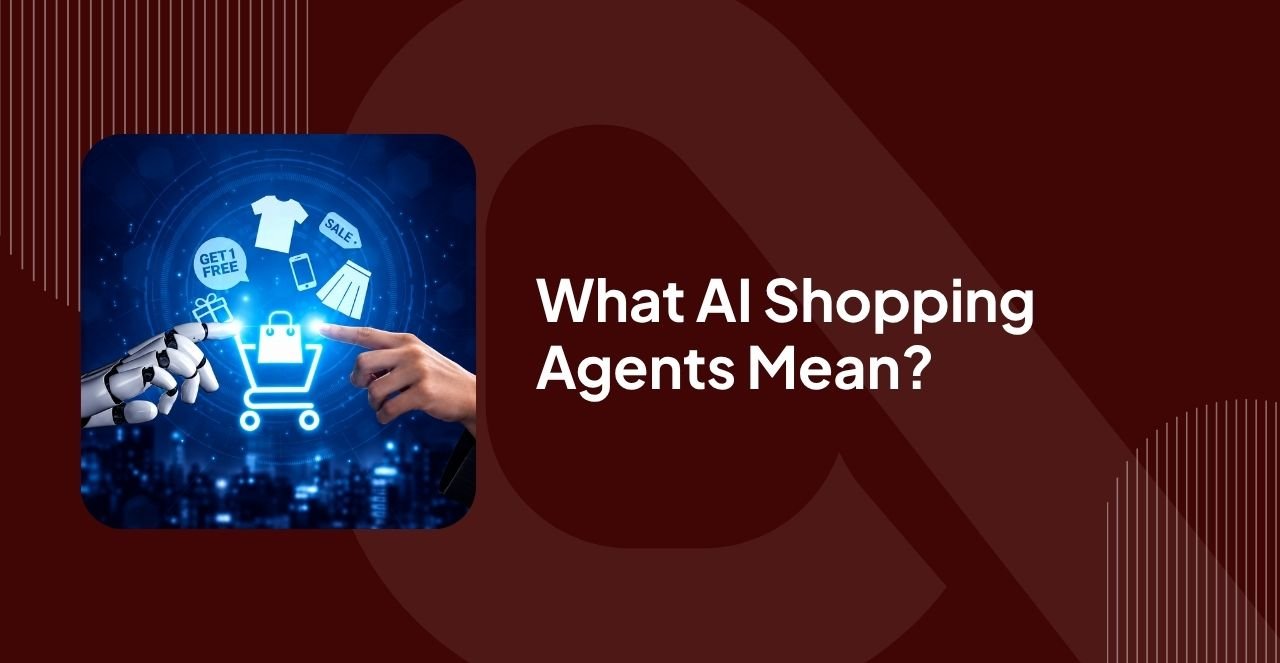
Online shopping is starting to move beyond search bars, filters and comparison tabs. A customer can now tell an AI assistant what they need, ask it to compare products, narrow the options and, in some cases, help complete the purchase.
That shift is known as agentic commerce.
For Australian ecommerce businesses, the important change is not simply another shopping channel. AI shopping agents are becoming intermediaries between customers and retailers. Your next customer may not browse ten product pages themselves. Their AI assistant may evaluate availability, price, reviews, specifications and suitability before deciding which products deserve attention.
The opportunity is significant, but so is the challenge: your store increasingly needs to make sense to machines as well as people.
What Is the Meaning of Agentic?
In AI, agentic describes systems that can take actions towards a goal rather than only provide an answer.
A conventional chatbot might answer:
“What running shoes are suitable for wet weather?”
An AI agent could potentially take that much further by:
-
understanding the customer’s requirements
-
researching suitable products
-
comparing prices and features
-
checking availability
-
narrowing the options
-
initiating or completing a purchase with permission
That shift from answering to acting is what makes agentic systems different.
If you want the broader technology explained first, our guide to what agentic AI is covers how agents plan and execute multi-step tasks.
Agentic commerce applies that capability specifically to buying and selling. Instead of the customer manually navigating every stage of ecommerce, an AI system helps manage more of the journey on their behalf.
Australian retailers are already preparing for this change. Australia Post’s 2026 ecommerce research reports that 32% of shoppers are already using AI for shopping advice, while 85% of businesses surveyed are taking steps to prepare for an agentic future.
Can You Give Me an Example of Agentic Commerce?
Imagine a Melbourne shopper tells an AI assistant:
“Find me a waterproof carry-on backpack under $180 that fits a 16-inch laptop and can arrive before Friday.”
In a traditional ecommerce journey, the shopper might search Google, open several stores, compare dimensions, check delivery estimates and read reviews.
With agentic commerce, an AI shopping agent can potentially perform much of that work itself. It could compare suitable products, eliminate bags that do not meet the size requirement, assess delivery availability and present the strongest options.
The next stage is transactional.
OpenAI introduced Instant Checkout in ChatGPT in September 2025 alongside the Agentic Commerce Protocol, or ACP, an open standard developed with Stripe to allow AI agents and merchants to exchange the information needed to complete purchases.
The model has continued evolving. In March 2026, OpenAI said it was putting greater emphasis on product discovery and merchant-controlled checkout experiences, allowing shoppers to move from ChatGPT into a merchant’s own checkout through an in-app browser. Some eligible products and merchants can still support Instant Checkout.
So buying through AI assistants is not one fixed checkout model. The agent might recommend a product, send the customer to a retailer, connect with a merchant integration or participate more directly in the transaction.
What Are the Differences Between Agentic AI and Agentic Commerce?
The simplest distinction is scope.
Agentic AI is the wider technology. It refers to AI systems that can pursue goals and perform actions across areas such as research, customer service, scheduling, software development or operations.
Agentic commerce is one commercial application of that technology. Its goal is to help with activities such as product discovery, comparison, ordering, payment and post-purchase tasks.
For ecommerce businesses, this introduces a new question:
Can an AI agent accurately understand and transact with your store?
That depends heavily on your product information.
A beautifully designed product page may work well for a human but still leave important facts unclear. Product title, price, availability, dimensions, delivery conditions, variants, returns and specifications should be represented accurately and consistently.
Product descriptions matter too. Rather than repeating generic manufacturer copy, explain who the product suits, what differentiates it and which problems it solves. Our guide to writing ecommerce product descriptions that sell covers how to make those pages more useful to both shoppers and search systems.
What Is the Agentic Commerce Protocol?
The Agentic Commerce Protocol is an open standard originally developed by OpenAI and Stripe to help AI agents and merchants communicate during a transaction.
Its purpose is not to replace the retailer.
Under the model OpenAI described at launch, the merchant remains responsible for the commercial relationship, including payment processing, fulfilment, returns and customer support. The agent helps pass the information required to complete the user’s requested purchase.
This type of infrastructure matters because the web’s checkout systems were primarily designed for humans clicking through forms. AI agents need more structured methods for identifying products, communicating intent and completing authorised actions.
ACP is also only one part of a wider industry movement. Payment providers and technology companies are developing their own infrastructure for agent-led transactions as the model evolves.
What Should Australian Ecommerce Businesses Do Now?
You do not need to rebuild your entire store for AI shopping tomorrow.
You should, however, make your ecommerce data easier to understand and trust.
Improve your product data
Review:
-
product names and descriptions
-
prices and currency
-
stock availability
-
variants
-
specifications
-
shipping information
-
returns
-
product imagery
-
reviews and ratings where appropriate
An AI agent choosing between several retailers needs reliable data to make that comparison.
Strengthen ecommerce SEO
AI shopping does not eliminate search optimisation. Product discovery still depends on machines being able to crawl, understand and retrieve information about what you sell.
Technical SEO, structured data, category architecture and useful product content remain important. See our guide to ecommerce SEO for increasing organic revenue for the underlying foundations.
Measure AI-referred customers
Watch analytics for referrals from AI assistants and changes in landing-page behaviour. AI-assisted visitors may arrive further into the buying journey because some comparison work has already happened before the click.
Do not measure success only by traffic volume. Revenue, conversion rate, average order value and customer quality matter more.
What Is the Future of Agentic Commerce?
The likely direction is a shift from searching for products towards delegating shopping tasks.
PwC Australia describes this as a change where retailers will increasingly need to be brands that AI agents can find, trust and transact with, not simply brands customers recognise.
But adoption will not happen overnight.
Trust remains a significant issue. Adyen’s 2026 Australian research found consumers are already using AI heavily for product discovery and comparison, while many remain uncomfortable allowing AI to complete purchases on their behalf.
That suggests the near-term opportunity sits around research, comparison and recommendations, with greater transaction autonomy developing as consumers become more confident in security and control.
Prepare Your Store for Customers Who May Never Start With Google
Agentic commerce changes the interface between shoppers and ecommerce stores. Customers will still make the decisions, but AI assistants may increasingly handle the research and comparison that comes before them.
For Australian retailers, the priority is straightforward: make products easy to discover, understand, compare and transact with across both human- and machine-led journeys.
If your ecommerce systems need to connect AI, workflows and customer data more effectively, explore Adcept Marketing’s AI automation services to prepare your business for more automated digital customer journeys.
FAQs
Are AI shopping agents already available?
Yes. AI assistants can already research, compare and recommend products, while some platforms and merchant integrations support deeper shopping and checkout functionality.
Can customers buy products directly through ChatGPT?
For some eligible products and merchants, ChatGPT supports purchase experiences including Instant Checkout. OpenAI is also increasingly connecting users to merchant-controlled checkout experiences.
Are ChatGPT product recommendations paid advertisements?
OpenAI says shopping product results are selected independently and are not advertisements. Ads are presented separately from organic shopping results.
Will AI agents replace ecommerce websites?
Not in the foreseeable future. Retailers still need product systems, fulfilment, payments, customer service and trusted brand experiences. What may change is how customers discover and enter those systems.
How can my products become easier for AI agents to find?
Focus on accurate structured product information, strong ecommerce SEO, useful descriptions, clear pricing and availability, reliable reviews and technically accessible pages.