Skip to content



Learn what Brand Radar is, how Ahrefs tracks AI visibility, and how brands can use AI citation tracking to grow reach.
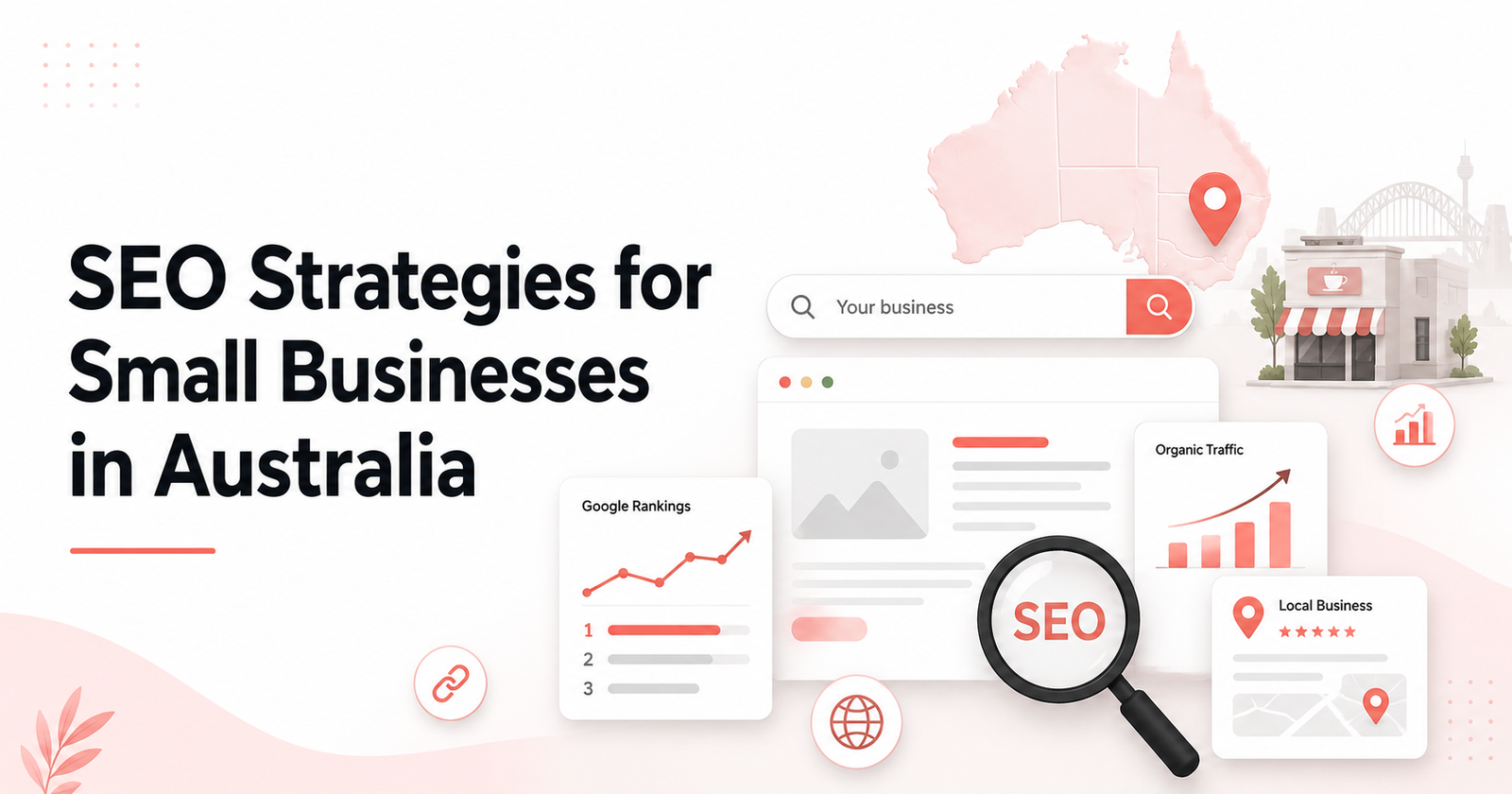
The best SEO strategy for small businesses focuses on being easy to find, easy to trust and easy to choose. For Australian businesses, this means combining local SEO, useful content, technical SEO, Google Business Profile optimisation, ethical link building and AI-assisted search visibility.
SEO is not just about ranking for one keyword.
It is about helping people find the right page when they are ready to compare, enquire, visit or buy.
This guide is the pillar article for Adcept’s SEO strategy content cluster. For deeper topics, you can also read our guides on local SEO, AI Overviews, technical SEO audits and SEO content strategy.
What Is Small Business SEO?
Small business SEO is the process of improving a business website so it can appear in search results for relevant services, products and locations.
It includes technical setup, page optimisation, local signals, helpful content, reviews, links and user experience.
Google’s SEO Starter Guide explains that SEO best practices help search engines crawl, index and understand your content.
For a small business, the goal is simple.
Show up when people are searching for what you sell.
What Are SEO Strategies for Small Businesses?
SEO strategies for small businesses are planned actions that improve organic visibility, local rankings, website quality and lead generation. They usually include keyword research, service pages, local SEO, Google Business Profile, content marketing, technical fixes, reviews, internal links and ethical backlinks.
Good SEO is not one task.
It is a system that improves over time.
Why SEO Matters for Small Businesses
SEO matters because customers often search before they call, book, visit or enquire.
A business with strong organic visibility can attract leads without paying for every click.
That does not mean SEO is free.
It needs planning, content, technical work and ongoing improvement.
But once pages start ranking, they can keep supporting enquiries for months or years.
For businesses comparing paid ads and SEO, the difference is timing.
Ads can create traffic quickly.
SEO builds long-term visibility and trust.
SEO Strategies for Small Businesses: Quick Overview
The core SEO strategies for small businesses are local SEO, Google Business Profile optimisation, service page improvement, helpful content, technical SEO, internal linking, review growth, link building and AI-assisted content optimisation.
For businesses that need a structured plan, Adcept’s SEO Services Australia can support strategy, technical fixes, content planning and AI-assisted optimisation.
Local SEO
Local SEO helps your business appear for searches with local intent.
Examples include:
- “dentist near me”
- “SEO agency Melbourne”
- “plumber in Parramatta”
- “accountant Brisbane”
- “wedding photographer Sydney”
- “physio near Richmond”
Google says local ranking is mainly based on relevance, distance and prominence, and recommends keeping Business Profile information accurate, complete and engaging.
Why Local SEO Matters
Local SEO matters because many customers want nearby options. If your business serves a city, suburb or service area, your website and Google Business Profile need clear location signals.
Important local SEO actions include:
- Create location-specific service pages
- Add suburb and service area context
- Use consistent business name, address and phone details
- Build local citations
- Collect genuine reviews
- Add local photos
- Publish locally relevant content
- Link service pages from your main navigation
For a deeper local strategy, read Adcept’s guide to local SEO.
Google Business Profile Optimisation
Google Business Profile, or GBP, is one of the most important assets for local businesses.
It can appear in Google Maps, branded searches and local search results.
A well-optimised profile should include:
- Correct business name
- Accurate address or service area
- Local phone number
- Website link
- Opening hours
- Primary and secondary categories
- Services
- Photos
- Reviews
- Updates
- Questions and answers
How to Optimise Google Business Profile
To optimise Google Business Profile, complete every relevant field, choose accurate categories, add real photos, list services, respond to reviews, update trading hours and keep business details consistent across the web.
Avoid stuffing keywords into the business name.
Use the real business name.
Then improve relevance through categories, services, website content and customer reviews.
Content Marketing and Topical Authority
Content marketing helps small businesses answer customer questions before the sales conversation.
It also helps search engines understand what your business is known for.
A strong content strategy should include:
- Service pages
- Location pages
- Comparison articles
- FAQs
- Buying guides
- Problem-solving blogs
- Case studies
- Industry-specific landing pages
- Internal links between related pages
Google’s AI features guidance says SEO best practices remain relevant for AI features like AI Overviews and AI Mode, because these features are rooted in Google’s core Search ranking and quality systems.
That means useful, clear and well-structured content still matters.
How to Build a Content Cluster
A content cluster groups related pages around one main topic. The pillar page covers the broad topic, while supporting articles answer specific questions and link back to the main page.
Example cluster for a legal firm:
This helps users and search engines see topic depth.
For more detail, read Adcept’s guide on SEO content strategy and the semantic on-page SEO framework.
Technical SEO
Technical SEO makes sure your website can be crawled, indexed and used properly.
It is the foundation behind rankings.
Important technical SEO checks include:
- Indexing status
- XML sitemap
- Robots.txt
- Page speed
- Mobile usability
- Broken links
- Redirect chains
- Duplicate pages
- Canonical tags
- Structured data
- Core Web Vitals
- Internal link depth
- HTTPS security
Technical SEO for Small Business Websites
Technical SEO for small business websites should focus on crawlability, speed, mobile experience, index control, clean URLs and fixing broken pages. These basics help search engines find and understand important service pages.
Many small sites do not need complex technical work.
They need the basics done properly.
For a practical checklist, see Adcept’s technical SEO audit checklist.
On-Page SEO
On-page SEO improves the content and structure of each page.
It helps search engines and users understand what the page is about.
Key on-page elements include:
- Page title
- Meta description
- H1 heading
- H2 and H3 structure
- Intro clarity
- Service details
- FAQs
- Internal links
- Image alt text
- Schema markup
- Clear calls to action
Difference Between Technical SEO and On-Page SEO
Technical SEO improves how a website is crawled, indexed and loaded. On-page SEO improves the content, structure and relevance of individual pages.
A small business needs both.
A fast page with weak content may not rank.
A helpful page with technical errors may not be found properly.
For stronger page-level optimisation, read Adcept’s guide to SEO copywriting.
Link Building and Digital PR
Links are still important, but quality matters more than volume.
A good backlink is usually earned from a relevant, trusted website.
Examples include:
- Local directories
- Industry associations
- Supplier websites
- Partner pages
- Podcast mentions
- Local media
- Guest insights
- Sponsorship pages
- Awards and case studies
Google defines link spam as creating links to or from a site mainly to manipulate search rankings, and its spam policies warn that these practices can affect eligibility and performance in Search.
Best Link Building Ideas for Small Businesses
The best link building ideas for small businesses are local, relevant and reputation-based. Focus on partnerships, industry directories, expert quotes, community sponsorships, case studies, media mentions, and useful resources people naturally want to reference.
Avoid cheap link packages.
They often create low-quality links from unrelated websites.
A small number of relevant links is usually better than hundreds of weak ones.
AI-Assisted SEO
AI-assisted SEO uses AI tools to support research, content planning, briefs, outlines, audits, internal linking and reporting.
It should help the SEO process, not replace human judgement.
Google’s guidance on AI features says there are no special tags or files that guarantee inclusion in AI Overviews or AI Mode, and standard SEO fundamentals remain the base for visibility.
AI can help with:
- Keyword clustering
- Topic research
- Content briefs
- FAQ generation
- Competitor summaries
- Internal link mapping
- Schema suggestions
- Drafting outlines
- Reporting summaries
- Search intent analysis
But human review is essential.
AI can miss local context, customer nuance, brand tone and factual accuracy.
Benefits of AI-Assisted SEO
AI-assisted SEO can make research and planning faster. It can help teams organise topics, find content gaps, create briefs and analyse large sets of pages more efficiently.
The best use of AI is structured support.
Not mass publishing weak content.
This is where an experienced SEO Agency Melbourne can combine human strategy with AI-supported workflows.
Platform and Industry Considerations
SEO is not identical for every business.
A local clinic, ecommerce store and B2B consultancy need different plans.
For ecommerce, see the guide on ecommerce SEO.
For professional services, read SEO for law firms and consultants.
For budget planning, review SEO pricing in Australia.
Real Business Example
A Melbourne-based accounting firm wants more enquiries from local business owners.
A practical SEO plan may include:
- Optimise Google Business Profile
- Build service pages for tax, bookkeeping and advisory
- Create suburb-focused pages for key service areas
- Publish articles answering common accounting questions
- Add accountant schema and FAQ schema
- Improve page speed and mobile layout
- Ask happy clients for genuine reviews
- Earn links from local business directories and partners
- Track calls, forms and ranking movements
This is a realistic plan for small business growth.
It connects visibility, trust and lead generation.
Common Mistakes
Mistake 1: Targeting Keywords That Are Too Broad
A small business may struggle to rank for broad national keywords early.
Start with service, suburb and intent-based terms.
Mistake 2: Ignoring Google Business Profile
For local businesses, GBP can influence discovery before a user even visits the website.
Keep it complete and active.
Mistake 3: Publishing Thin Blog Posts
Short, generic content rarely builds trust.
Answer real questions with specific examples and useful detail.
Mistake 4: Buying Low-Quality Links
Cheap link building can harm trust.
Focus on relevance and reputation.
Mistake 5: Measuring Only Rankings
Rankings matter, but leads matter more.
Track calls, forms, bookings and revenue where possible.
Best Practices
Best Practices for SEO Strategies for Small Businesses
The best SEO strategy for small businesses combines local visibility, clear service pages, technical health, helpful content, reviews, ethical links and conversion tracking.
Use these best practices:
- Start with local and service intent
- Optimise your main service pages first
- Keep Google Business Profile accurate
- Build content clusters around customer questions
- Improve mobile speed and usability
- Use internal links between related pages
- Earn relevant local and industry links
- Track enquiries, not only traffic
- Review Search Console monthly
- Update important pages every few months
Expert Tip
Do not try to rank for everything at once.
Choose one service, one location and one customer problem.
Build the best page for that search first.
Future Trends
Small business SEO is changing as Google adds more AI-powered search features.
But the foundation is still the same.
Helpful content, technical access, strong local signals and trusted business information remain important.
Future trends include:
- More AI Overviews and AI Mode searches
- More conversational search queries
- Greater importance of first-hand experience
- Stronger use of structured content
- More entity-based SEO
- Better local content clusters
- More AI-assisted audits and reporting
- Stronger focus on brand trust and reviews
Google’s own AI optimisation guidance says SEO fundamentals continue to matter for generative AI features in Search.
For deeper AI search context, read Adcept’s guide on Google AI Overviews.
Quick Summary
The most effective SEO strategy for small businesses includes local SEO, Google Business Profile optimisation, strong service pages, technical SEO, helpful content, ethical links, reviews and AI-assisted SEO workflows.
Start with the pages and locations most likely to generate leads.
Then build topical authority over time.
Conclusion
The best SEO strategy for small businesses are practical, local and focused on customer intent.
You do not need to do everything at once.
Start with your core services, local visibility, Google Business Profile, technical basics and useful content.
Then strengthen your site with internal links, reviews, case studies and relevant backlinks.
As AI changes search results, small businesses should focus on being clear, trustworthy and easy to understand across both traditional search and AI-powered search features.
For Australian businesses that want a structured growth plan, Adcept’s Local SEO Services can support strategy, technical SEO, content, local optimisation and AI-assisted search improvement.
Key Takeaways
- Google Business Profile is essential for local visibility.
- Technical SEO helps search engines crawl, index and understand your site.
- Content clusters build topical authority over time.
- Ethical link building is better than cheap backlink packages.
- AI can support SEO research, planning and reporting, but needs human review.
- Track leads, calls and bookings, not only rankings.
- SEO works best as an ongoing system, not a one-off task.
FAQs
What are the best SEO strategies for small businesses?
The best strategies include local SEO, Google Business Profile optimisation, service pages, technical SEO, helpful content, reviews, internal linking and ethical link building.
How long does SEO take for a small business?
Most small businesses need several months to see meaningful SEO movement. Timing depends on competition, website quality, content, technical issues, backlinks and how active the business is locally.
Is local SEO important for small businesses?
Yes. Local SEO is often one of the most important channels for businesses that serve a city, suburb or service area. It helps customers find you through Google Search and Maps.
What should I optimise first for SEO?
Start with your main service pages, Google Business Profile, website speed, mobile usability and contact conversion points. These usually have the clearest impact on leads.
Do small businesses need backlinks?
Yes, but they need relevant backlinks, not large numbers of low-quality links. Good links can come from local directories, partners, industry websites, media mentions and useful resources.
Can AI help with SEO?
Yes. AI can help with keyword clustering, content briefs, audits, internal linking, FAQs and reporting. Human review is still needed for accuracy, local relevance and quality.
What is the difference between SEO and local SEO?
SEO improves visibility in organic search results. Local SEO focuses on visibility for location-based searches, including Google Maps, Google Business Profile and suburb-level search intent.
Should I hire an SEO agency or do it myself?
If your site is small and competition is low, you can do many basics yourself. If you need strategy, technical fixes, content planning and faster implementation, an agency can save time and reduce mistakes.