Skip to content



Learn how to read Google Search Console’s generative AI performance report, track AI Overviews visibility and measure AI traffic in GA4.
Publishing occasional blog posts is no longer enough to build strong search visibility. Modern SEO relies on topical coverage, structured content networks, and consistent publishing strategies.
Search engines increasingly evaluate whether a website demonstrates deep expertise in a subject area rather than simply ranking individual pages.
This is where a topical map becomes essential.
A topical map is a structured blueprint that outlines all topics, subtopics, and related entities that a website should cover to establish authority within a specific niche.
Instead of publishing isolated articles, businesses create interconnected content clusters that reinforce each other through internal linking and semantic relationships.
When implemented correctly, this approach turns content into a long-term asset rather than a one-off marketing expense.
Each article strengthens the authority of the entire topic cluster, making it easier for other pages in the network to rank.
This guide explains how businesses can build a twelve-month content strategy using a topical map framework that aligns with modern search algorithms and AI-driven search systems.
Why Topical Maps Are Essential for Modern SEO
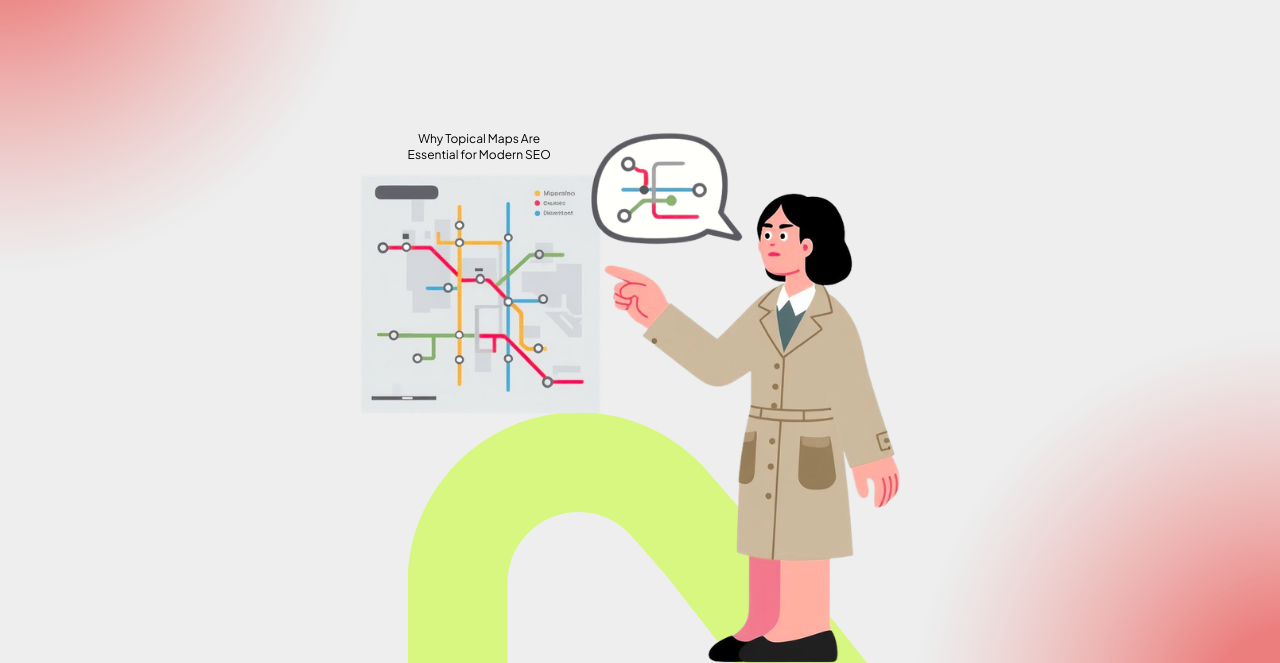
Search engines no longer rank pages purely based on keyword targeting. Instead, they evaluate whether a website demonstrates expertise across an entire subject area.
This shift means that websites covering a topic comprehensively are more likely to rank than those publishing isolated articles.
A topical map helps businesses plan content in a structured way that reflects the relationships between topics.
For example, a marketing agency might build a topic cluster around digital marketing strategy. Within that cluster, supporting articles could cover SEO strategy, analytics measurement, automation tools, and customer engagement tactics.
Each article links to other relevant pages within the cluster, strengthening the semantic relationship between them.
Search engines interpret these connections as signals of authority.
Businesses implementing professional SEO services often begin with a topical mapping process that identifies all relevant entities within a niche.
Once the full topic landscape is mapped, content can be planned systematically over the course of several months.
This approach ensures that each new article contributes to a broader strategy rather than existing as an isolated piece of content.
Identifying Core Entities Before Creating Topics

The first step in building a topical map is identifying the entities that define the subject area.
An entity is a concept, product, organisation, or idea that search engines recognise as a distinct topic.
For example, within the subject of digital marketing, entities might include search engine optimisation, paid advertising, analytics platforms, marketing automation, and customer relationship management systems.
By identifying these entities early in the planning process, businesses can ensure that their content strategy reflects how search engines understand the topic.
Once the core entities are identified, the next step is mapping relationships between them.
This involves identifying how each concept connects to the broader subject area.
For instance, customer relationship management technology may connect to topics such as CRM integration, sales automation, and customer lifecycle management.
Understanding these relationships helps businesses organise their content logically.
Many companies also incorporate industry-specific technology topics into their topical maps. For example, businesses exploring AI automation solutions may develop content explaining how automation improves marketing performance.
When the entity relationships are mapped clearly, the topical map becomes the foundation for the entire content strategy.
Mapping Search Intent Across the Content Plan

Every topic within a topical map should align with a specific type of search intent.
Search intent represents the reason behind a user’s query.
Understanding this intent allows businesses to create content that directly addresses the needs of the searcher.
There are four primary types of search intent.
- Informational searches occur when users want to learn about a topic. These queries often include questions or educational phrases.
- Commercial searches involve users researching products or services before making a purchase decision.
- Navigational searches occur when users are trying to find a specific brand or website.
- Transactional searches indicate a strong intent to complete an action such as making a purchase or booking a service.
A well-designed topical map includes content for each stage of the customer journey.
For example, an informational article might explain how marketing automation works. A commercial article might compare different marketing automation tools. A transactional page might describe the agency’s AI automation services.
By aligning content with search intent, businesses ensure that their articles attract the right type of audience at each stage of the decision-making process.
Building a Hub and Spoke Content Structure

One of the most effective ways to organise a topical map is through a hub and spoke architecture.
In this structure, a central pillar page serves as the hub for a specific topic.
Supporting articles, known as cluster pages, connect to the pillar page and explore individual subtopics in greater detail.
For example, a pillar page might provide a comprehensive overview of search engine optimisation strategy.
Cluster pages might then explore related topics such as technical SEO audits, link building strategies, content optimisation, and analytics tracking.
Each cluster page links back to the pillar page, while the pillar page links out to all supporting articles.
This structure creates a network of interconnected content that reinforces the authority of the entire topic cluster.
Businesses often combine this architecture with professional web design and development to ensure the content structure is easy for both users and search engines to navigate.
When search engines recognise a website as the most comprehensive resource on a topic, its pages become more likely to rank across a wide range of related queries.
Planning a Twelve-Month Publishing Calendar

Once the topical map is defined, the next step is building a twelve-month publishing plan.
This process ensures that content is produced consistently while gradually expanding the website’s topical coverage.
A typical publishing plan might begin with pillar pages that define the main topic clusters.
Supporting articles are then published around these pillars over the following months.
For example, the first quarter may focus on foundational topics that establish the website’s expertise.
The second quarter might expand into deeper subtopics and specialised content areas.
Later quarters can focus on advanced guides, case studies, and industry analysis.
Businesses often combine this strategy with content promotion across social media marketing channels to amplify visibility.
Publishing cadence also plays an important role. Search engines interpret consistent publishing as a signal that the website remains active and trustworthy.
Even if the number of articles is modest, maintaining a steady publishing rhythm over twelve months strengthens the overall authority of the site.
This disciplined approach transforms content creation into a strategic investment rather than an occasional activity.
Measuring Performance and Refining the Topical Map

A topical map is not static. As search behaviour evolves, the content strategy should adapt accordingly.
Businesses should regularly monitor performance metrics to understand how their content clusters are performing.
Key indicators include search impressions, keyword rankings, and organic traffic growth.
Another useful signal is the number of long tail queries generating impressions.
When a website begins ranking for variations of keywords that were not explicitly targeted, it often indicates growing topical authority.
Analytics tools can also reveal how users interact with different articles and how often they navigate between pages.
Companies using analytics and reporting solutions often track these metrics to identify gaps in their content coverage.
If certain subtopics attract strong engagement, additional supporting articles can be created to strengthen the cluster.
Over time, this process transforms the topical map into a dynamic knowledge framework that evolves with both the industry and the search landscape.
Conclusion
A well constructed twelve month topical map transforms content from a marketing expense into a long term strategic asset.
Instead of publishing random blog posts, businesses build interconnected semantic networks that demonstrate expertise across an entire subject area.
Every article within the cluster reinforces the authority of the others, making it easier for the entire network to rank.
This approach also creates resilience against search algorithm updates because authority is built through comprehensive coverage rather than isolated keyword targeting.
Businesses that plan their content topically, rather than focusing only on keyword volume, build the kind of search presence that adapts to both algorithm changes and AI-driven search systems.
Over time, this strategy turns a website into the most cited and trusted resource within its niche.
Key Takeaways
- Topical maps begin with entity identification, defining the core subject before listing topics.
- Each topic should align with a specific search intent, such as informational, commercial, navigational, or transactional.
- Hub and spoke architecture connects pillar pages with supporting cluster articles.
- Content gaps weaken the authority of the entire cluster rather than just a single page.
- Consistent publishing cadence signals credibility and trustworthiness to search engines.
Frequently Asked Questions
What is a topical map for SEO?
A topical map is a structured framework that outlines all topics and subtopics a website should cover to establish authority within a subject area. It organises content into interconnected clusters rather than isolated articles.
How many articles do I need to establish topical authority?
The number depends on the breadth of the niche. A specialised service business may establish strong authority with forty to sixty well-structured articles, while larger industries may require significantly more.
How do I know if my content is improving topical authority?
Indicators include increasing rankings across multiple related pages, growth in impressions for long tail keyword variations, and appearing in advanced search features such as AI-generated summaries.
How long does it take for a topical map strategy to show results?
Most businesses begin seeing measurable improvements within several months of consistent publishing. However, strong authority usually develops over twelve to eighteen months.
Can small businesses benefit from topical maps?
Yes. Smaller businesses often gain a competitive advantage by focusing on niche expertise. Covering a specific topic deeply can allow them to outrank larger competitors with broader but less focused content.